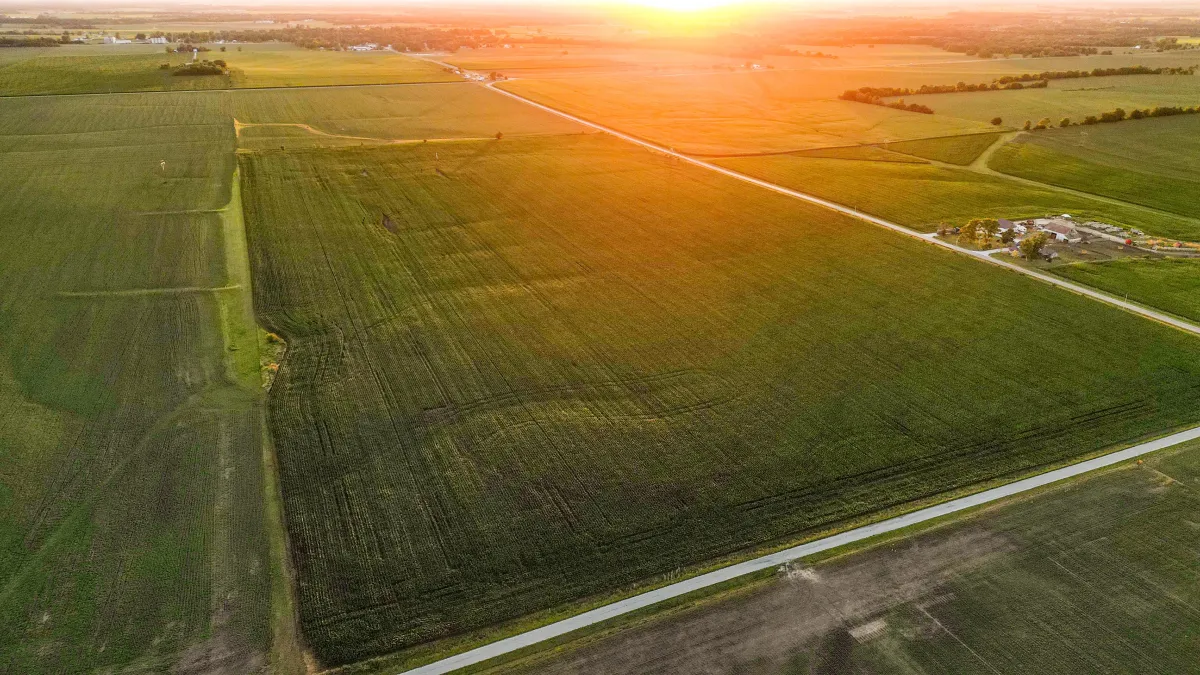
Year End Tax Planning for Illinois Farmland Owners
Why the Next 90 Days Matter for Illinois Farmland Owners
Federal and Illinois state income tax is determined on a December 31 calendar year basis. The decisions that affect a farmland owner's 2026 tax position — income timing, expense acceleration, capital transaction structuring — need to happen before that date. A landowner who waits until February to think about tax strategy is reviewing the outcome of decisions that were already made by default. The landowner who acts in September, October, and November is the one making those decisions intentionally.
This article is not tax advice. Tax decisions for a farmland owner with significant land holdings, rental income, and potential sale transactions should be made with a CPA or tax attorney who knows the owner's full financial picture. What follows is the framework — the categories of decisions that matter, the options within each category, and the questions a farmland owner should be bringing to that professional conversation right now while there is still time to execute.
Cash Rent Income — Timing and Deduction Strategy
Cash rent from farmland is ordinary income to the landlord and is taxed at ordinary income rates. Most central Illinois farmland leases pay the full year's rent in a single payment — often in March or December, depending on the lease terms. A landlord who receives a December cash rent payment has received 2026 income. A landlord whose lease calls for a March payment has received nothing in 2026 and will report that income in 2027. The timing built into the lease structure has direct tax consequences, and a landlord who wants to shift income between tax years needs to understand what their lease terms actually produce.
On the deduction side, farmland owners who paid property taxes, incurred capital improvement expenses, or had deductible management costs in 2026 need to ensure those expenses are properly documented and recorded in the correct year. Property taxes paid in 2026 are deductible in 2026 regardless of which year they cover. A capital improvement — drainage tile, grain bin, building repair — may be depreciable rather than immediately deductible depending on its nature and cost, and the depreciation method chosen affects when and how much of that cost reduces taxable income.
Farmland Sales — Capital Gains and Structuring Options
A farmland sale completed in 2026 generates a capital gain in 2026. For a landowner who bought central Illinois ground decades ago at prices that are a fraction of today's values, that gain can be substantial — potentially several hundred thousand dollars or more on a single parcel. Federal long-term capital gains tax rates are 15 percent for most taxpayers and 20 percent for high-income taxpayers, plus the 3.8 percent net investment income tax for taxpayers above the threshold, plus Illinois state income tax on capital gains at the ordinary income rate. The combined tax burden on a large farmland gain is real and deserves attention before the transaction closes rather than after.
The three primary structuring options for a farmland sale with a significant gain are: the installment sale, the 1031 exchange, and the charitable remainder trust. An installment sale spreads the gain over multiple years — the buyer pays the purchase price over a period of years, and the seller reports the gain as payments are received. This can keep the seller in a lower capital gains bracket in any single year and defer a portion of the tax liability to future years. The tradeoff is that the seller is a creditor of the buyer for the outstanding balance, which creates collection risk that a cash sale does not.
A 1031 exchange defers the capital gain entirely by reinvesting the sale proceeds into a qualifying replacement property within the exchange timeline. The gain is not eliminated — it is deferred until the replacement property is eventually sold, or until the taxpayer's death, at which point the stepped-up basis rules may eliminate the gain entirely for the heirs. The 1031 exchange is the most powerful tax deferral tool available for farmland sales, but it requires the exchange to be structured before the relinquished property closes and replacement property to be identified and acquired within the statutory timeline.
A charitable remainder trust converts a highly appreciated asset into a stream of income by transferring the property to the trust, which sells it without recognizing capital gain, invests the proceeds, and pays the donor an income stream for life or a term of years. The donor receives a partial charitable deduction at the time of the transfer. At the end of the trust term, the remaining assets pass to a designated charity. This is not the right tool for every seller, but for a farmland owner with significant philanthropic intent and a large embedded gain, it deserves a conversation with an estate planning attorney before the year ends.
Estate Planning Decisions That Have 2026 Tax Implications
The federal estate tax exemption in 2026 is scheduled under current law — verify the current amount with your estate planning attorney, as this figure is subject to legislative change. Illinois has its own estate tax with a lower exemption threshold, and a central Illinois farmland owner with 300 or 400 acres of ground valued at current market prices may be within the Illinois estate tax exposure range even if they are below the federal threshold.
Annual gifting to reduce the taxable estate is a year-end planning tool — the annual gift tax exclusion allows a taxpayer to give a set amount per recipient per year without reducing the lifetime exemption. For a farmland owner who wants to transfer partial ownership interests to children or grandchildren over time, beginning that gifting program before December 31 captures the current year's exclusion. Gifts of fractional interests in farmland require current-year appraisals for IRS purposes, and getting that appraisal work done in October or November rather than December avoids the year-end scheduling crunch that makes appraisers unavailable.
The Question to Ask Your CPA Right Now
The single most useful thing an Illinois farmland owner can do before October 1 is schedule a conversation with their CPA that specifically addresses 2026 tax exposure and what decisions need to happen before December 31. Come to that conversation with: your current cash rent income for 2026, any capital improvement expenses incurred or planned, the status of any farmland transactions — completed or under consideration — and a current estimated value of your farmland holdings for estate planning context.
That conversation, had in October rather than January, is the difference between tax planning and tax reporting. One changes the outcome. The other just documents it.
Jared Williams is the Managing Broker and owner of Archer Realty & Auction LLC. He serves on the Menard County Board of Review and specializes in estate real estate transitions, farmland succession, and land sale transactions across central Illinois. Start the conversation at archerrealty.net.