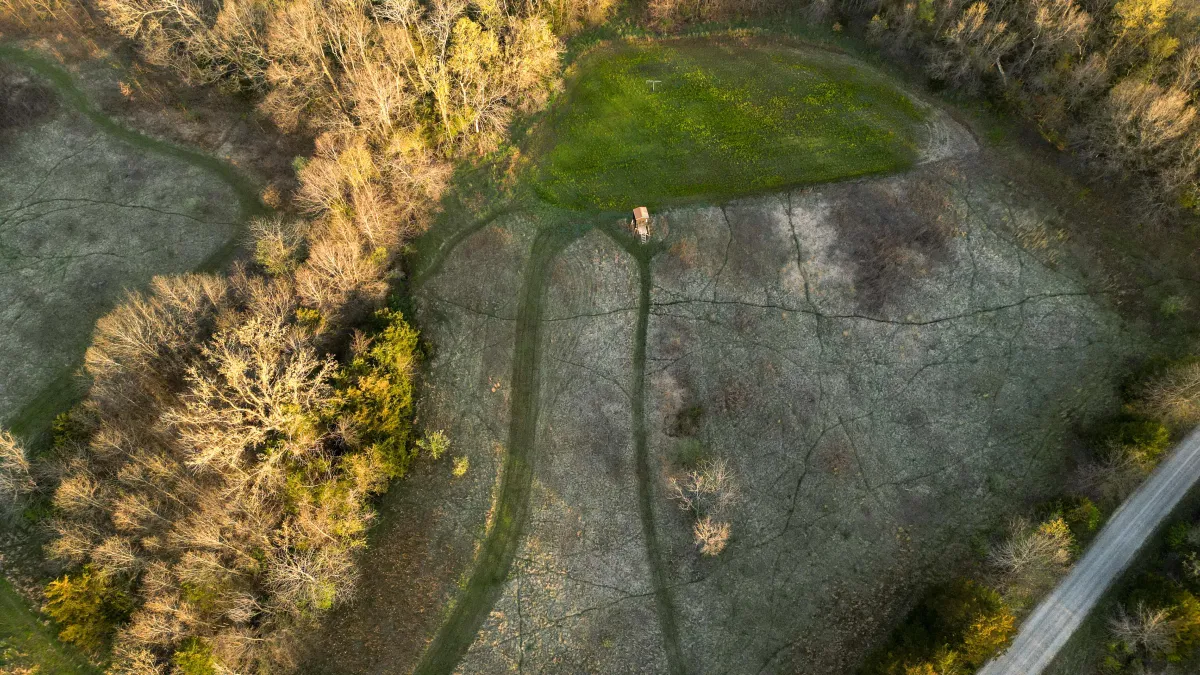
What Buyers Miss When Evaluating Recreational Land in Illinois
Why appearance, taxes, access, and real-world function matter more than most buyers realize
Most recreational land buyers in Illinois make the same mistake.
They evaluate what they can see.
And they miss what actually matters.
A property can look right—good timber, decent access, sign everywhere—and still be the wrong purchase.
I’ve seen it too many times.

A Good Walk Doesn’t Equal a Good Property
When buyers step onto a property, they’re looking for confirmation.
Deer sign
Trails
Cover
Layout
And if it checks those boxes, they feel confident.
But here’s the problem:
That first walk is often misleading.
Because it doesn’t tell you how the property actually functions over time.
Most Buyers Don’t Understand How the Property Hunts
This is where experience matters.
Not all land hunts the same.
You have to look at:
How access impacts entry and exit
How wind direction limits setups
How pressure affects movement
Where deer actually move—not just where sign exists
A property can have great sign and still be difficult to hunt consistently.
That’s something you don’t always see in a showing.
The Tax Reality That Gets Ignored
This is one of the biggest misses—and it shows up after the purchase.
Recreational land in Illinois is typically taxed based on market value.
Not productivity like farmland.
That means:
Your tax bill is tied to what the property would sell for—not what it produces.
I’ve seen buyers focus heavily on purchase price…
And completely underestimate long-term tax cost.
Serving on the Board of Review in Menard County, I see how often this gets misunderstood.
A “Blank Slate” Is Not Always a Positive
A lot of recreational ground is sold as:
“Blank canvas”
But here’s the reality:
If you can’t move through the property, you can’t fully understand it.
And if a buyer can’t understand it, they hesitate.
Simple improvements matter:
Trail systems
Access routes
Defined entry points
These don’t just improve usability.
They change how a property is perceived—and ultimately its value.
Buyers Rarely Evaluate the Work Required
What does this property need after closing?
Most buyers don’t ask that question clearly enough.
Does it need habitat work?
Access improvements?
Clearing?
Ongoing management?
Because that work turns into time and money.
And it directly affects the real cost of ownership.
The Surrounding Ground Tells You Everything
You are not just buying 40 acres.
You are buying everything around it.
Neighbor pressure
Surrounding habitat
Agriculture patterns
Access points
This is one of the most overlooked parts of evaluating recreational land.
And one of the most important.
The Difference Between “Looks Good” and “Is Good”
There’s a gap between:
A property that looks good on a showing
And a property that performs over time
The buyers who understand that difference:
Ask better questions
Evaluate deeper
Make better decisions
Real Perspective
Working with buyers across Illinois—and reviewing property classifications and values through the Board of Review—I see both sides.
What looks good on paper.
And what actually holds up over time.
Most mistakes are not due to bad intent.
They come from incomplete evaluation.
Final Thought
Recreational land is one of the most enjoyable assets you can own.
But it requires a different level of thinking.
If you evaluate beyond:
Appearance
First impression
Surface-level features
You give yourself a much better chance of buying something that actually works.
Not just something that looks right.
About the Author
Jared Williams is the Managing Broker of Archer Realty and serves on the Menard County Board of Review in Illinois. He specializes in agricultural, recreational, and rural property, helping buyers evaluate land based on real-world performance, tax structure, and long-term ownership strategy.