Selling Hunting Land in the Fall: Does Season Timing Change Your Price in Western Illinois?
Why Fall Is the Strongest Inquiry Period for Hunting Land
October and November are when recreational land buyers in western Illinois are most active. Archery season is open, the first firearm season runs November 20 through 22, and hunters who walked properties this fall and found the public access crowded or the lease market thin are calling about ownership. The emotional pull of land ownership is highest when a hunter is sitting in a stand on a piece of ground they do not own and wishing they did — and that is a large portion of the hunting population in Pike, Adams, and Brown counties right now.
For a seller, that inquiry volume is real and it is concentrated. The window from October through the first week of December tends to produce more qualified buyer conversations on recreational ground than any other period of the year, and a well-positioned listing during that window is working with that demand rather than against it. The question is not whether fall is a good time to sell — it is whether your specific situation is positioned to take advantage of it.
Does Season Timing Change the Price?
In a direct sense, the answer is no — the per-acre price a qualified buyer will pay for a well-located Pike County timber tract does not change because it is October versus June. The underlying value drivers — timber quality, deer density, food and water, access, soil type on any tillable acres — do not change with the calendar. What changes is the number of qualified buyers looking at that category of property at any given time, and October and November have more of them than February does.
That buyer concentration does not guarantee a premium over what the property would bring in a February listing, but it changes the probability of finding the right buyer quickly and without extended market time. A recreational property that sits on the market through December and January and then goes into spring as a listed property with 90 days on market carries a perception problem — buyers assume there is something wrong with it — that reduces your negotiating leverage. A property that sells in November does not carry that history.
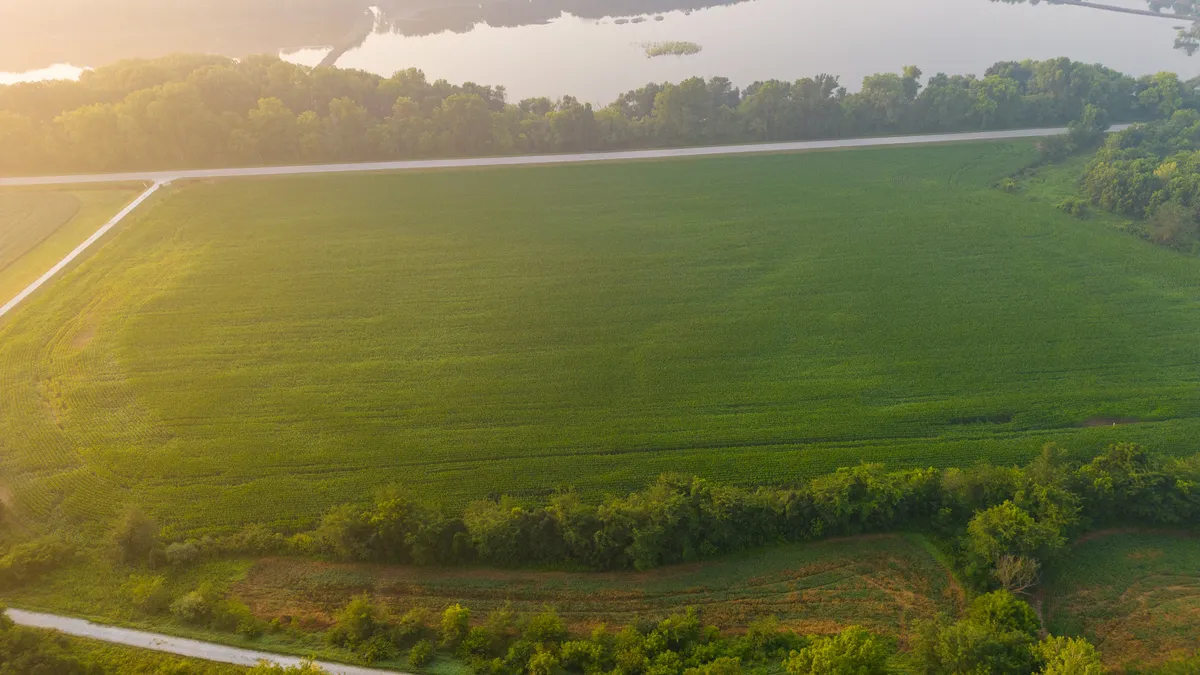
What does change price is how the property is presented and what story the listing tells during the season. A listing with current trail camera photos, aerial imagery showing timber density, documentation of CRP or food plot management, and access to the property during a controlled showing window in October will produce a different result than a listing with a Google Maps screenshot and a three-line description. The buyer pool during deer season is knowledgeable, and they respond to documentation.
Auction Versus Listing: How They Compare for Hunting Ground
Both auction and traditional listing are viable methods for selling recreational ground in western Illinois, and the choice between them depends on your specific priorities. An auction sets a specific sale date, creates competitive bidding pressure among registered buyers, and produces a non-contingent sale on the day of the event. The price is determined in real time by the bidders in the room, and a well-marketed auction with multiple registered bidders regularly produces prices above what a negotiated listing would have brought. The trade-off is that you accept the auction price regardless of what it is — there is no opportunity to counter at a higher number after the auctioneer calls it sold.
A traditional listing gives a seller more control over the process — the ability to evaluate individual offers, negotiate, and decline a price that does not meet expectations. The trade-off is time and uncertainty. A listing that does not attract a buyer at the asking price requires a price reduction or an extended market period, and either outcome carries a cost. For recreational ground in a county with an active auction market, the auction frequently produces better results than a listing that sits — and Pike, Adams, and Brown counties have active auction markets for recreational land.
The decision also depends on tenant and lease status. A property with a farm tenant who has 12 months remaining on a lease may be better suited to an auction that markets to buyers who understand tenanted ground than to a listing process where individual buyer expectations vary widely on that point.
What Sellers Are Required to Disclose
Illinois law requires sellers of residential property to complete a disclosure form, but recreational land transactions — timber, hunting ground, and agricultural property — operate under different disclosure norms. There is no mandatory Illinois disclosure form for a farm or recreational land sale the way there is for a residential property. That does not mean a seller can conceal material defects without consequence; Illinois common law imposes a duty not to actively misrepresent material conditions, and a seller who knowingly conceals a known title defect, a boundary dispute, or a known environmental condition is exposed to claims after closing.
For practical purposes, the disclosures that matter most on a western Illinois hunting property are: CRP contract status and terms, existing hunting leases or verbal hunting agreements that grant access to third parties, any known title or boundary disputes, known environmental issues (petroleum storage tank history, herbicide application history on management areas), and drainage district or levee district obligations if any portion of the property is in a drainage district. A seller who produces that documentation upfront — rather than waiting for a buyer to discover it during due diligence — moves a transaction faster and with less friction.
Call Archer Realty if you are considering selling hunting or recreational land in Pike, Adams, Brown, or Schuyler County. We handle both auction and traditional listing, and the conversation about which method fits your situation and timeline does not take long.
Jared Williams is the Managing Broker, licensed auctioneer, and owner of Archer Realty & Auction LLC, specializing in recreational and agricultural land sales across western and central Illinois. Start the conversation at archerrealty.net.