What to Look for in Pike County Hunting Ground Before Illinois' November Firearm Season
The Firearm Season Deadline Is Real — Here Is Why It Matters for a Buyer
Illinois firearm deer season runs November 20 through 22 for the first segment and December 3 through 6 for the second. A buyer who wants to hunt a new Pike County property during firearm season needs to close on the transaction before November, which means getting the property under contract in the next two to three weeks and moving through a 30 to 45-day closing timeline without delays. That is not impossible, but it is a calendar that does not have much slack. A buyer who evaluates a property this week, makes an offer, and executes it can be on the ground scouting before the October 1 archery opener and hunting it in November.
The urgency is not artificial. It is the arithmetic of the transaction timeline mapped against the hunting calendar. Every week spent deciding is a week less for scouting, stand placement, and the observation period that separates a productive November hunt from a blind hunt on unfamiliar ground.
Timber Cover — What You Are Looking for and Why
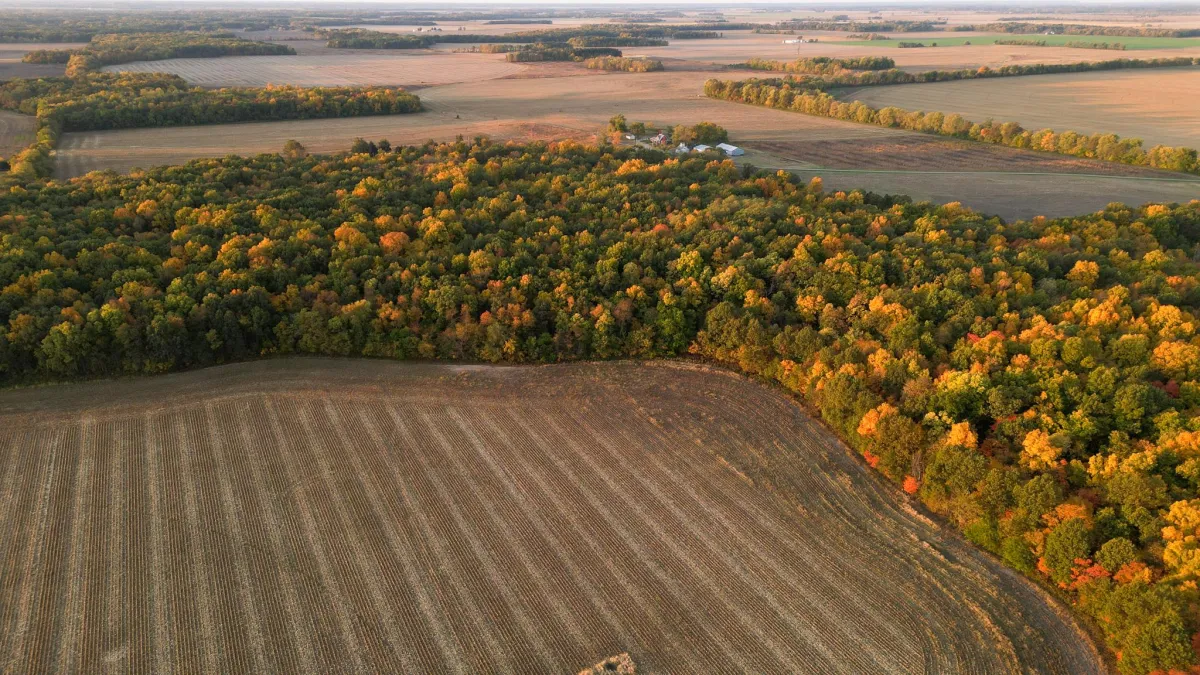
Pike County's timber reputation is built on the bluff-country terrain that runs along the Illinois River corridor and the creek systems draining into it — mature mixed hardwood with significant white oak coverage, broken by agricultural edges and creek bottom draws. The best hunting ground in the county is not the most timbered ground. It is the ground where the timber configuration creates natural deer movement — ridges and draws that funnel travel between bedding and feeding areas, saddles and creek crossings that concentrate deer during the rut, and enough internal variation that a hunter can play multiple wind directions from different stand locations on the same property.
Walk the ridge lines. Find the saddles — the low points where two ridges converge — because these are where deer naturally cross from one drainage to the next, and they are the stand locations that produce consistent results across years rather than one good morning when conditions happened to align. A property that has only one or two workable stand locations is less valuable as a hunting operation than a property that can be hunted five different ways depending on wind direction and deer movement phase. Count your stand options before you make your offer.
White oak mast is the specific timber feature that makes October and November pike county ground productive. Walk the oak stands and look for acorn drop — a mature white oak flat with active mast in late September is showing you deer activity that cannot be faked by a trail camera setup or a food plot. A property where the oak mast is abundant and the stand locations to hunt it are good is telling you something directly. A property where the timber is mature but the oak coverage is limited — ash, cottonwood, and silver maple in the creek bottom with limited upland oak — will produce differently from September through November than a property with significant upland white oak.
Food Plot Potential — What to Evaluate Before You Buy
A property without existing food plots is not automatically a property without food plot potential. The question is whether the terrain and soil support the kind of food plot that holds deer rather than the kind that grows grass and then deer ignore. Pike County food plot sites that work are typically small — one to three acres — positioned in clearings adjacent to timber bedding where deer transition from cover to feeding at dusk, with enough topographic screen between the plot and the entry trail that a hunter can access a stand without crossing through the deer's line of sight or scent path.
Identify the clearing candidates on any property you evaluate. Openings in timber that receive adequate sunlight, have soil that is not compacted hardpan, and are positioned relative to the bedding so deer are comfortable using them before taking light — these are the food plot sites that become assets within one or two growing seasons. A property with two or three legitimate food plot candidates and the timber cover to support their use is worth more than the same acreage without them, even if no plots are currently established.
Walk the existing food plots on any property that has them and evaluate their condition in late September. A plot that is browsed to the ground — nothing but deer tracks and stem stubs — is being used. A plot that is lush and ungrazed in late September either is not visible to deer, is not accessible in a way deer feel comfortable using, or has been abandoned by a deer population that no longer uses that part of the property. Both outcomes tell you something about how the property is functioning.
Access Roads — The Variable That Ends Hunts Before They Start
Access is the most frequently undervalued variable in a hunting property evaluation and the one most likely to reveal itself as a problem after closing. Walk every access route from the road to every stand site you are considering. Note which routes require crossing through bedding or through the area the deer will be coming from. A stand that can only be reached by walking through the deer's bedroom before dawn is a stand that will not produce consistently — the approach educates deer about human pressure and eventually moves them off the property during hunting hours.
Ask specifically about access road conditions in wet weather. A two-track farm road that is fine in September may be impassable from November through March. A Pike County property with excellent terrain but a seasonal access road loses significant value as a hunting operation because the seasons when it cannot be accessed are the seasons that matter most — late archery, firearm season, and late-season cold weather hunting when mature bucks are most vulnerable.
Verify that the access you are evaluating is actual deeded access or an easement recorded in the chain of title — not a handshake arrangement with the neighboring landowner that has worked for the last 20 years. Handshake access arrangements end when the neighboring property sells. A new owner has no obligation to honor them. This is a title review item that your real estate attorney needs to confirm before closing, and it is a question you should ask explicitly at the showing.
What the Calendar Requires of You Right Now
If you have been tracking Pike County listings and have a property in mind, the decision timeline between now and October 1 archery opener is as short as it has been all year. A showing this week, an offer made by October 1, and a standard 30 to 45-day closing timeline puts you in the property before firearm season. Walk the timber, walk the access routes, look at the food plot sites, and ask the questions above. The information you need to make a sound decision is all available on the ground right now — before leaves fall and before hunting pressure changes how the property reads.
Jared Williams is the Managing Broker and owner of Archer Realty & Auction LLC. He spent 13 years as a producer for the Outdoor Channel before returning to Illinois to build a land brokerage rooted in operator-level expertise in recreational real estate across central and western Illinois. Start the conversation at archerrealty.net.