Late Season Deer Hunting Land in Illinois With Habitat
What Established Habitat Means and Why It Matters
When a listing describes a hunting property as having established habitat, it usually means one of two things: the land has been specifically managed for deer over multiple years and shows the physical evidence of that management, or it is a marketing phrase applied to any property with timber on it. Knowing the difference before you make an offer matters significantly, because a property with genuine habitat management history is worth considerably more than comparable acreage where deer movement patterns are unproven and stand placement has to start from scratch.
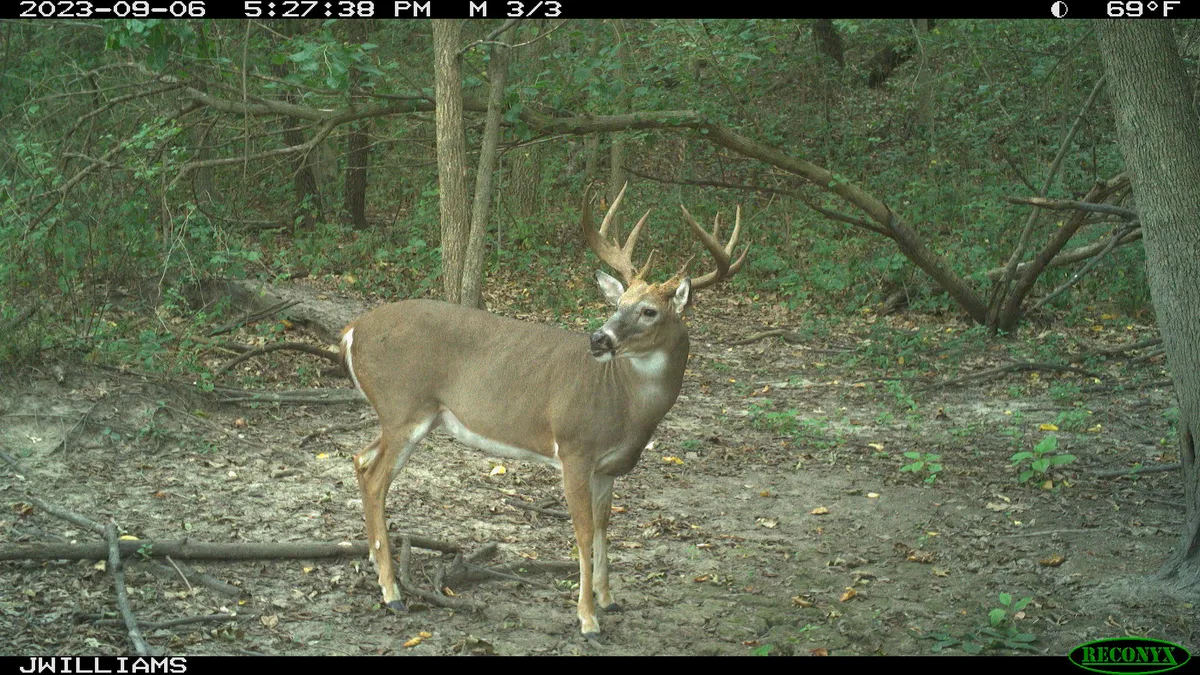
Firearm season opens November 20 and the second firearm season runs December 3 through 6. A buyer who closes on a property in late October or early November wants to know not just whether the ground looks good from an aerial map, but whether it has produced deer consistently and at what quality level. That information exists — in trail camera photos, harvest records, and the physical signs left by mature deer — and a serious seller of a well-managed property should be able to provide it. A seller who cannot or will not produce that evidence is telling you something about what the evidence would show.
Reading Bedding Cover on a Hancock or Brown County Tract
Bedding cover in Hancock and Brown county hunting ground takes a specific form that is different from upland farmland deer habitat. The bluff-country hardwood timber in western Illinois — steep ridges, creek drainages, south-facing timber faces — provides the kind of thermal cover and concealment that mature whitetails seek for daytime bedding. What a buyer is looking for on a walk in late October is timber with a closed canopy, sufficient understory to provide security cover, and proximity to a food source within 200 to 400 yards of the bedding location within the property boundary.
The classic Hancock County bedding situation is a south-facing bluff with mature hardwoods above a creek drainage, within a short walk of a standing corn or bean field or a food plot. The deer bed on the bluff face, travel the creek drainage in the evening to feed, and return before full light. A property that has that structure within its own boundary — not dependent on a neighbor's field as the food source — is a self-contained hunting system. A property that has the bedding but not the food source within the ownership is dependent on what a neighbor plants or leaves standing, and that dependence is a risk that a knowledgeable buyer discounts.
Travel Corridors: What to Look for in November
Travel corridors — the routes deer use to move between bedding and feeding areas — are the most valuable locations on a hunting property and the ones most difficult to identify without walking the ground in season. A corridor is typically a terrain feature that provides concealment and a defined path: a creek bottom that connects a bedding ridge to a feeding area, a fence line with vegetation growth on both sides, a saddle between two ridges, or a finger of timber extending from a larger woods into a field edge.
In late October, active travel corridors in Hancock and Brown counties are identifiable by rub lines, scrape sequences, and worn trails through leaf litter. A rub line along a creek drainage or timber edge that shows multiple trees rubbed in the same general direction tells you how deer are moving through the area and from which direction. A scrape sequence — multiple scrapes within 100 to 200 yards of each other along a travel route — identifies a corridor that mature bucks are monitoring during the rut period, which peaks in early November in western Illinois.
A property where the primary travel corridor runs through the center of the ownership — rather than along the boundary where neighbor pressure from adjacent stands can affect deer movement — is structurally superior to a comparable property where deer enter from one edge and are frequently influenced by hunting pressure from neighboring properties. This is a terrain and ownership configuration question, not just a biological one, and it is worth mapping on the aerial before you walk.
Food Sources: What Transfers With the Property and What Does Not
A hunting property's food sources fall into two categories: those within the ownership that the new owner controls, and those adjacent to the ownership that the new owner depends on but does not control. Both matter to deer movement, but only the first category is reliable across ownership changes.
Food plots — planted areas of clover, brassicas, cereal grains, or native forage species — are infrastructure that a management-focused seller has invested in over multiple seasons. A property with established food plots in good condition represents a meaningful investment of time and seed cost, and those plots should be identified in the listing and confirmed during the walkthrough. A food plot that was planted two seasons ago and has been maintained — mowed, limed, and replanted as needed — performs differently than a plot that was seeded once and left to compete with grass and weeds.
Agricultural adjacency — the presence of corn or soybean fields farmed by a tenant on the same or neighboring ground — provides a seasonal food source that is valuable but not permanent. A tenant who switches from corn to beans, or who harvests a field that was left standing into December, changes the food dynamic on the property. A buyer who is purchasing primarily for the hunting quality that the current tenant's crop rotation provides should confirm what the rotation plan is and whether the tenant is committed to a multi-year lease that maintains it.
Contact Archer Realty if you are evaluating a hunting property in Hancock, Brown, Adams, or Schuyler County this fall.
Jared Williams is the Managing Broker and owner of Archer Realty & Auction LLC, specializing in recreational and agricultural land in western and central Illinois. Start the conversation at archerrealty.net.