Illinois Waterfowl Hunting Land — What River Bottom Property Offers Beyond Deer
What Makes Illinois River Bottom Ground a Multi-Season Hunting Asset
The western Illinois hunting land conversation is almost entirely about whitetail deer. The trophy buck reputation, the October archery opener, the rut hunt — that narrative drives the majority of recreational land purchases in Pike, Adams, Cass, Brown, and Schuyler counties. What often goes unmentioned in the same conversation is that the same river bottom terrain that produces world-class deer hunting also produces exceptional waterfowl hunting during the November and December duck and goose seasons.
The Illinois River corridor is one of the most significant waterfowl migration routes in North America. The Mississippi Flyway pushes migrating ducks and geese through western Illinois in concentrated numbers during the late-season migration, and the backwater sloughs, flooded timber, and agricultural edges along the Illinois River and its tributaries hold birds at levels that hunters who have not experienced the corridor underestimate. A property that sits on or adjacent to the Illinois River with backwater flooding potential is not just a deer hunting property. It is a duck hunting property. Those two seasons together — October through January — make western Illinois river bottom land one of the most versatile multi-use hunting assets available at any price point in the Midwest.
What True Waterfowl Ground Looks Like vs. Property That Just Has Water
Not every western Illinois property near water is a waterfowl hunting property. The distinction matters and shows up in price and in actual hunting quality. True waterfowl ground has specific features that produce consistent bird numbers: backwater sloughs that flood naturally or can be managed with water control structures, mature timber that holds ducks in flooded conditions, agricultural crop residue within easy flight distance that provides a feeding area, and sight lines and concealment that allow hunters to set decoys and approach blinds without educating birds before the season opens.
Properties that have a small pond or a seasonal drainage that happens to hold some water in wet years are not waterfowl properties in the meaningful sense. The flood plain properties along the Illinois River — Cass County around Beardstown, Schuyler County along the Crooked Creek drainage, Mason County near the Sangamon River confluence — are where the real waterfowl hunting opportunity exists. These properties have the water volume, the adjacent timber, and the migration corridor positioning that produce the kind of duck hunting that draws serious waterfowlers back year after year.
The Sanganois State Fish & Wildlife Area in western Cass County is a reference point for understanding what true waterfowl habitat looks like in this corridor. The private ground adjacent to or near that kind of public land managed specifically for waterfowl often inherits bird numbers that the public land pressure pushes onto less-pressured private acreage. That spillover effect is real and is worth evaluating when looking at any private property near significant public waterfowl management areas in the Illinois River corridor.
How Waterfowl Potential Affects Property Value
A western Illinois river bottom property with documented waterfowl hunting — backwater sloughs, flooded timber, established blinds, and a history of duck hunting production — commands a premium over comparable terrain without that documented use. The premium reflects both the additional hunting season and the scarcity of true waterfowl ground in the private market. Most of the best Illinois River waterfowl habitat is held by long-term owners who inherited or acquired it decades ago and have no intention of selling. What comes to market is a meaningful opportunity precisely because of how rarely it appears.
For buyers evaluating a western Illinois property with waterfowl potential, the due diligence on that potential is different from deer hunting due diligence. Ask for the history: has this ground been duck hunted, by whom, for how long, and with what kind of results? Is there water control infrastructure in place, and what is its condition? Are there existing blinds or pit locations, and where are they situated relative to the prevailing flight lines? What is the flood history — does the property flood consistently enough to hold birds, or only in exceptional wet years?
Properties with excellent answers to those questions are priced differently than properties where the waterfowl potential is theoretical rather than demonstrated. A buyer willing to do the work to document the potential on underdeveloped waterfowl ground may find value there, but they are taking development risk that a property with proven production does not carry.
The Season Overlap and Why It Changes the Property Math
Illinois archery deer season opens October 1. Illinois duck season typically opens in late October or early November and runs through January. The overlap is real — a hunter who owns western Illinois river bottom property is not choosing between deer hunting and duck hunting. They are doing both from the same property, in sequential seasons that together cover four months of the year.
That combined season length changes the math on property ownership. A 120-acre western Illinois property that produces deer hunting from October through January and duck hunting from November through January is not a weekend property used three or four times a year. It is a hunting operation that justifies the investment across a full quarter of the year, with each season complementing rather than competing with the other. Families that hunt multiple disciplines — deer and ducks — find that river bottom property delivers a return on investment, measured in hunting opportunity, that single-species properties cannot match at the same price per acre.
What to Look For When Evaluating Waterfowl Potential on a Property
Walk the property in the fall before you buy it. In September and October, the vegetation and water conditions are close to what you will experience during duck season. Look for natural low points that hold water after rain. Look for mature timber with significant understory — not just open woods — that would hold ducks in flooded conditions. Look at the terrain relative to the river or slough system: properties with direct access to the main water body or connected backwater systems produce more consistently than properties isolated from the primary water source.
If possible, talk to neighboring landowners about their hunting experience. The western Illinois waterfowl community is tight-knit, and locals who have hunted the area for years know which specific properties produce and why. That ground-level knowledge is not available in an MLS listing, but it is available through the right conversations.
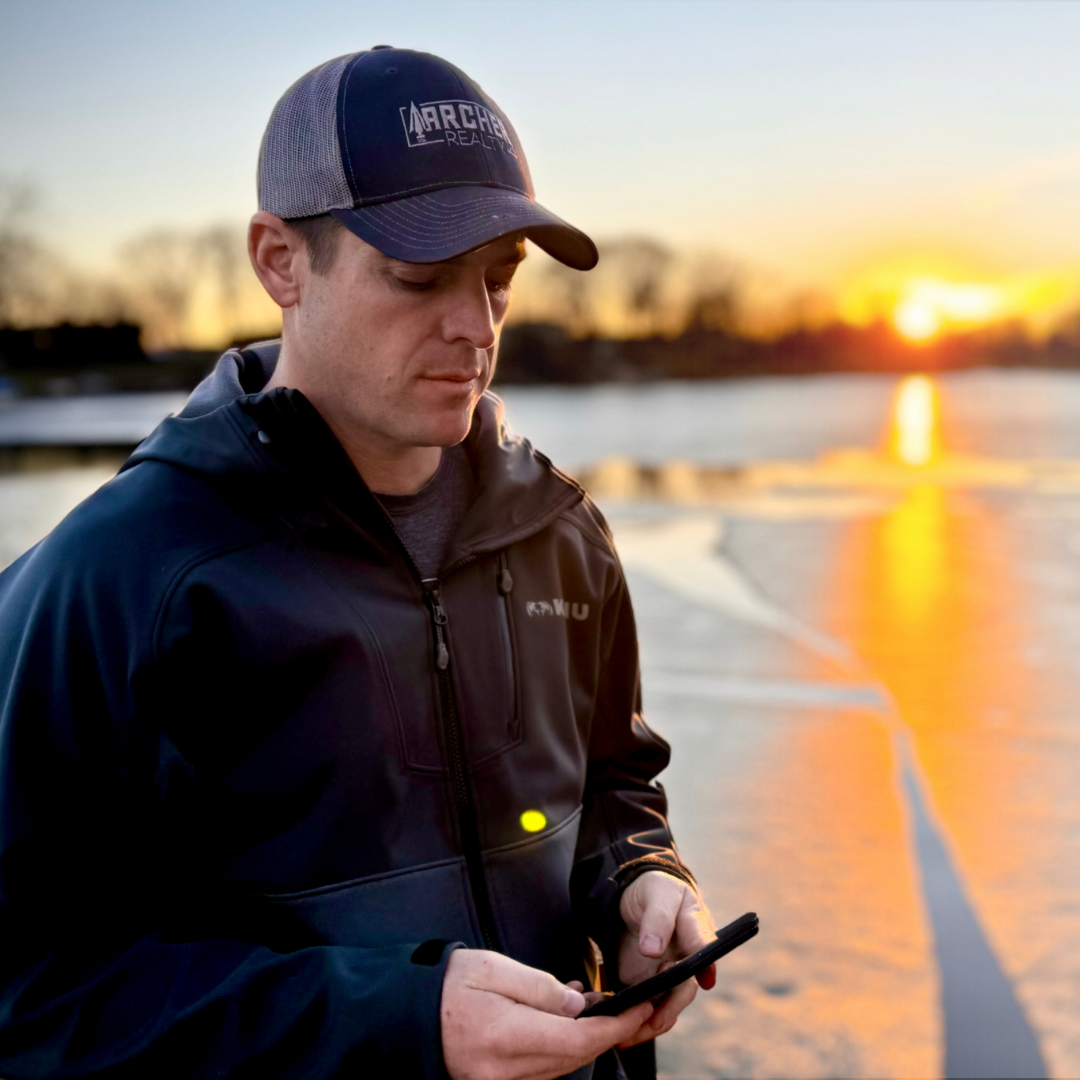
Jared Williams is the Managing Broker and owner of Archer Realty & Auction LLC. He spent 13 years as a producer for the Outdoor Channel before returning to Illinois to build a land brokerage rooted in operator-level expertise in recreational real estate across central and western Illinois. Start the conversation at archerrealty.net.