Pheasant and Quail Season Opens November 7 — What Brown and Schuyler County CRP Ground Is Actually Doing
What the Population Data Tells You About Western Illinois Right Now
Illinois pheasant populations have been in a long structural decline driven by changes in land use — CRP acres have declined since their peak, agricultural edge cover has decreased as farming has become more intensive, and the wet springs that destroy ground-nesting bird success have been more frequent. Western Illinois — the bluff-country counties of Brown, Schuyler, Calhoun, Pike, and Scott — has maintained a more viable wild pheasant population than most of the rest of the state because the terrain, the brush cover, and the farming practices in this corridor have remained more compatible with wild bird habitat than the highly productive central Illinois row crop counties where pheasant are essentially absent.
Brown County is the specific county in this corridor where a hunter with a dog who is willing to cover ground in CRP and brush-edge habitat can still have a legitimate wild pheasant experience. The population is not what it was in the 1970s or 1980s — nothing in Illinois is — but it is real, it is huntable, and it is concentrated in a specific land type that a hunter who understands the terrain can locate and work effectively. Schuyler County, immediately north of Brown, holds a smaller but similar upland bird population that benefits from the same land type characteristics.
What CRP Configuration Matters and Why
Not all CRP produces upland birds, and a hunter or land buyer who is evaluating western Illinois CRP ground for its upland hunting potential needs to understand the difference. Enrolled CRP that has been in grass for multiple years — long enough to establish thick, varied cover with some woody intrusion from multiflora rose and other edge species — holds birds. Newly enrolled CRP that is in early grass establishment, or CRP that was enrolled in switchgrass and managed as a solid stand without diversity, does not hold birds at the same density.
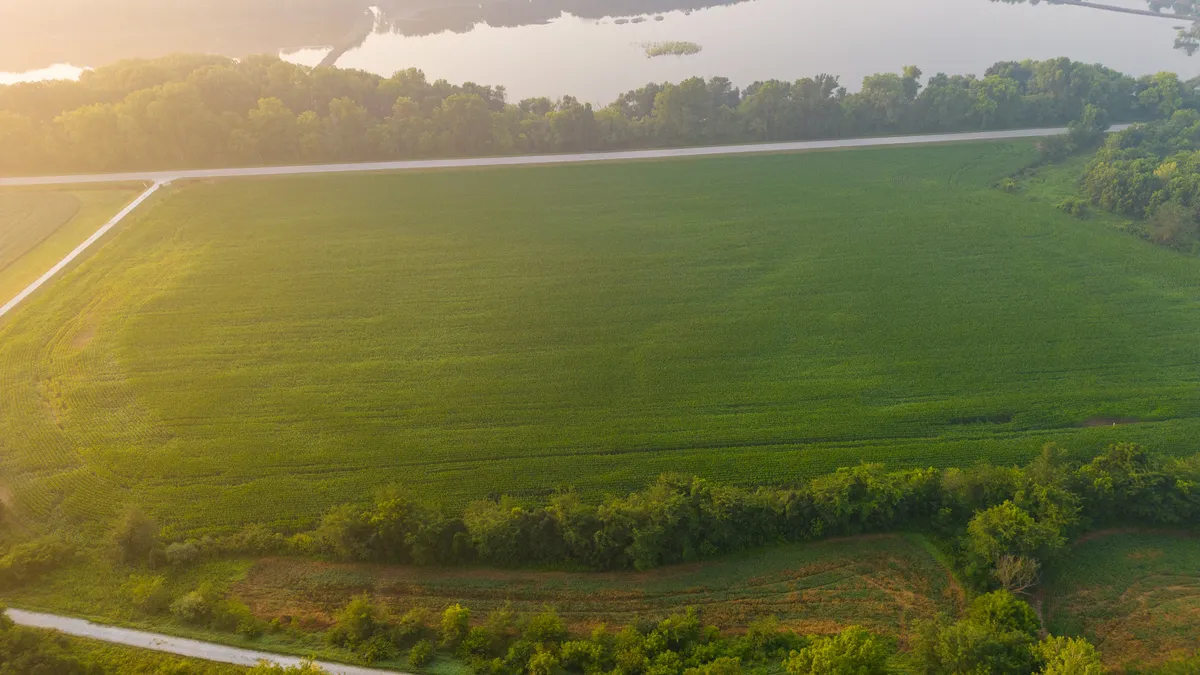
The CRP that produces the best pheasant hunting in Brown and Schuyler County is the ground that has grass cover adjacent to agricultural fields, particularly standing corn or unharvested soybeans where birds can feed and retreat, with woody cover or brush edge at field margins that provides escape cover when the dog pushes them. A property that has CRP on the upland, corn or beans within walking distance, and shrub cover at the margins of the CRP is configured exactly as a pheasant holding that a hunter with a pointing dog or flushing dog can work effectively.
Properties that have CRP on steep slopes — the kind of terrain common in the bluff-country counties along the Illinois River — hold birds in the draws and creek bottoms where wind protection and brush cover are both present. These sites are more physically demanding to hunt but often hold birds that have not been pressured because the hunting difficulty keeps casual hunters off them. A well-conditioned hunter and dog working a steep Brown County draw with good brush cover in early November, with no wind and moderate temperature, is hunting wild pheasants in country where the bird exists in its natural range.
Quail — What Has Changed and What Remains
Northern bobwhite quail in western Illinois are a remnant population concentrated in the most southerly portions of the species' Illinois range. Schuyler County and the counties south of it — Brown, Calhoun, Pike, Scott — hold the highest density of wild quail remaining in Illinois, and even there the populations are modest compared to historical levels. The quail population has been affected by the same land use changes that have reduced pheasant populations, compounded by the species' specific vulnerability to severe winter weather and early spring cold snaps that reduce adult survival and nest success.
What a quail hunter should understand about Schuyler and Brown County in fall 2026 is that the birds are there but they are concentrated, they are in cover that is thicker than most hunters expect, and they are not distributed uniformly across the landscape. A covey that has survived to November is a covey that has found a specific patch of habitat — usually a brushy draw, a fence row with substantial thicket, or a creek bank with a combination of grass and woody cover — that has provided both food and escape cover through the summer. Hunting that specific habitat type, rather than walking over open country looking for quail randomly, is the difference between a productive hunt and a blank day.
The hunting lease market for quail-specific ground in this part of Illinois is thin — not many landowners advertise it, not many hunters are specifically targeting wild quail. A landowner with ground that holds a legitimate covey can typically find a serious quail hunter who will pay for exclusive access, maintain the habitat, and become a reliable long-term lessee who treats the property with care because they understand what they have access to.
What a Land Buyer Should Know About Upland Ground Pricing in This Corridor
The recreational land market in Brown and Schuyler County is primarily priced by deer and turkey hunting potential — the dominant recreational uses in these counties. Upland bird hunting on the same ground is often an additional amenity rather than the primary value driver, which means a buyer who specifically values the pheasant or quail component of a property is rarely paying a premium for it relative to what a deer-focused buyer would pay for the same acreage.
A property in Brown County with 80 acres of mixed timber and CRP that holds both deer and a huntable pheasant population will be priced primarily by its deer hunting value — the timber configuration, the stand sites, the food plot potential — with the upland ground treated as a bonus. A buyer who is specifically an upland bird hunter looking at the same property is getting the deer hunting value of that timber ground at no additional cost over what the deer value alone would produce, because the buyer pool competing for it is not composed of dedicated upland bird hunters paying upland premiums.
This makes western Illinois bluff-country ground a genuine opportunity for a buyer who hunts multiple species — the deer value dominates the pricing, the upland bird value comes with it. A buyer who hunts only upland birds and is evaluating pure upland ground without timber should look at the CRP-heavy parcels in the county that do not have enough timber to attract deer-focused buyers, which will be priced more softly per acre.
Jared Williams is the Managing Broker and owner of Archer Realty & Auction LLC. He spent 13 years as a producer for the Outdoor Channel before returning to Illinois to build a land brokerage rooted in operator-level expertise in recreational real estate across central and western Illinois. Start the conversation at archerrealty.net.