How Much Does an Illinois Hunting Lease Pay Per Acre — Cover Type, Rates, and What Landowners Miss
Why Per-Acre Rates Vary Widely — The Cover Type Framework
A hunting lease is not priced per acre the way a farm lease is priced per acre. A farm lease is priced based on the productive capacity of the soil — a direct yield calculation that allows for a reasonably precise per-acre value across comparable ground. A hunting lease is priced based on the hunting experience the ground produces, which is determined by the cover type, the game species it supports, the quality of stand sites, the access situation, and the density of competing properties available to hunters in the same market. Two properties with the same acreage and the same county address can produce per-acre lease rates that differ by 400 percent because they have different cover types and support different hunting experiences.
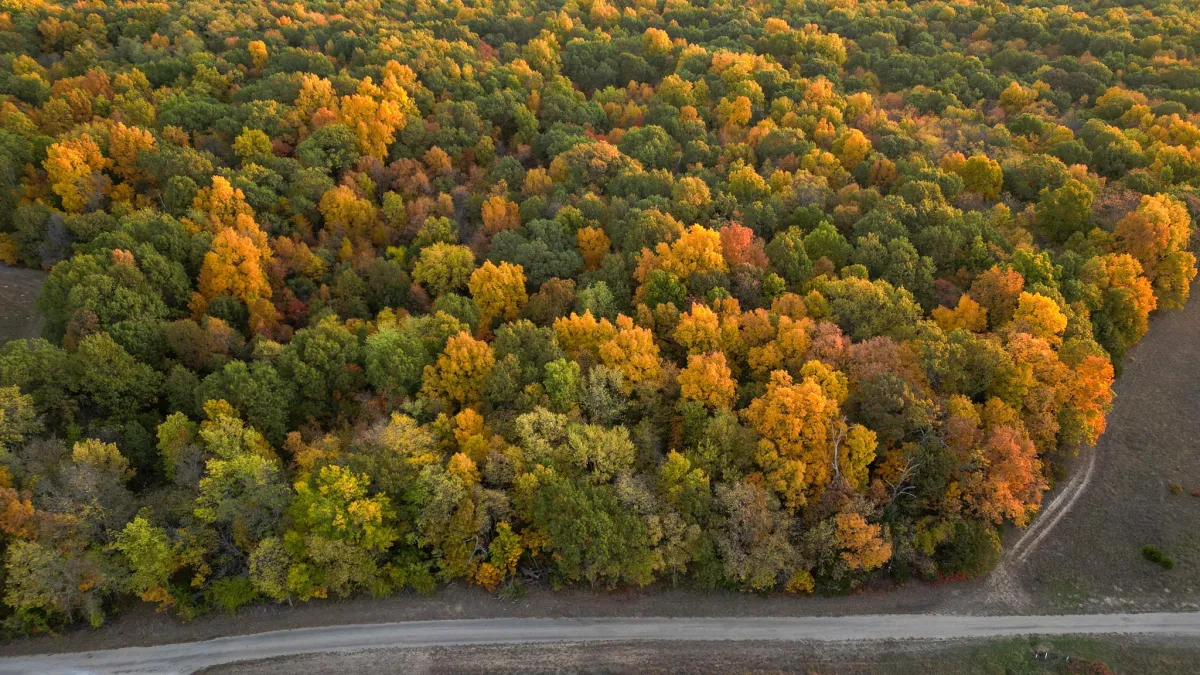
The framework that works for evaluating hunting lease income starts with identifying what the ground actually produces for a hunter. Mature timber with deer and turkey populations in western Illinois bluff-country counties — Pike, Adams, Brown, Schuyler — produces the highest per-acre rates in Illinois, typically in the range of $12 to $20 per acre for exclusive seasonal access for deer and turkey. That range reflects the premium that serious hunters in high-demand markets place on limited, high-quality hunting ground in counties with documented deer harvests that justify the rate. River-bottom waterfowl ground with access and blind positions in the Illinois River corridor produces the second-highest rates — $15 to $35 per acre for waterfowl-specific seasonal access on a quality piece of ground with established infrastructure.
CRP and upland ground in the same counties leases at substantially lower per-acre rates — typically $3 to $7 per acre for pheasant and quail upland access. Agricultural ground with some hunting value around the edges — travel corridors, a few stands at field margins, no dedicated hunting habitat — produces the lowest rates, frequently in the $2 to $5 per acre range when it is leased for hunting at all. The spread between a quality western Illinois timber piece leasing at $18 per acre for deer season and an adjacent row crop field leasing at $3 per acre for general hunting access illustrates why acreage alone is a poor predictor of hunting lease income.
What Lease Structure Determines Beyond the Per-Acre Rate
The lease structure — the specific terms governing what the hunter can do on the property, when, with how many guests, and with what restrictions — determines whether the rate the landowner receives for a lease is the full value of the hunting resource or a fraction of it. A landowner who leases their 80-acre timber property to a hunting club for $12 per acre for deer and turkey season has received $960 for the year. A landowner who structures the same property as three separate limited-access deer stands available to three different parties for the early archery season, firearm season, and late archery season separately, at $350 to $400 per party per season, has received $3,000 to $3,600 from the same 80 acres without changing the property at all — only the lease structure.
Most landowners who lease hunting ground in Illinois are leaving money on the table because they are leasing to a single club or party on an undifferentiated seasonal basis when the ground could support a more structured approach. This is not universally better — a single responsible club with a long-term relationship, who maintains the property, follows the rules, and provides consistent income without drama, has value that a higher-revenue but higher-management structure does not. The landowner who wants simplicity and a reliable relationship is not making a mistake by leasing simply. But the landowner who assumes the per-acre rate they were offered is the market rate, without understanding how alternative structures would change the income, is making a decision with incomplete information.
The Liability Question Every Landowner Should Address Before Signing
Illinois has an Premises Liability Act provision that limits landowner liability for recreational users — in broad terms, a landowner who allows access for recreational purposes without charge is limited in their liability for injuries occurring on the property. A landowner who charges for recreational access — a paid hunting lease — does not benefit from the same liability limitation. A paying hunter who is injured on a hunting lease property in Illinois may have a stronger claim against the landowner than a hunter who accessed the same property for free.
This does not mean that hunting leases should not be charged — the income from a well-structured hunting lease is real and valuable. It means that a landowner with a paid hunting lease should carry adequate liability coverage for that use, verify with their farm or landowner insurance carrier that hunting lease income is disclosed and covered, and use a written lease agreement that includes the indemnification and insurance provisions that make the liability picture clear between the parties. A handshake hunting lease with no written agreement and no disclosed insurance is not an arrangement that protects the landowner if something goes wrong.
The lease agreement should specify: the parties, the property, the lease term, the permitted activities, the guest policy, the access conditions, the payment amount and schedule, the indemnification language, and the insurance requirements for the lessee. A hunting lease agreement does not need to be expensive to draft — a template from an Illinois farm bureau or farm management association, reviewed by an attorney, is adequate for most situations. The cost of a proper written lease agreement is trivial relative to the cost of a disputed hunting season or an uninsured liability claim.
What Fall 2026 Rates Look Like in Practice
The central Illinois market for deer hunting leases — ground in Sangamon, Menard, Logan, Mason, and the adjacent counties — is pricing quality timber with documented deer activity in the $8 to $14 per acre range for exclusive seasonal deer and turkey access. Western Illinois bluff-country timber in Pike, Adams, Brown, and Schuyler is pricing quality ground in the $12 to $20 range, with the high end reserved for properties with documented trophy-class deer history, limited pressure, and high-quality stand infrastructure already in place. River-bottom waterfowl ground with established blind positions and water control capability in the Central Zone is pricing in the $15 to $30 range depending on the specific location and the season structure the property supports.
The landowner in any of these counties who has been approached by a hunting club offering $5 per acre for ground that supports documented quality deer hunting should understand that the rate being offered reflects the club's preferred starting point, not the market value of the resource. Knowing the cover-type-specific market rate for your county before a lease negotiation is the single most valuable piece of information a landowner can have. The second most valuable is a written lease structure that protects the landowner's interests and addresses liability clearly before the first hunter walks onto the property.
Jared Williams is the Managing Broker and owner of Archer Realty & Auction LLC. He spent 13 years as a producer for the Outdoor Channel before returning to Illinois to build a land brokerage rooted in operator-level expertise in recreational real estate across central and western Illinois. Start the conversation at archerrealty.net.