Why Hunting Land Prices Vary in Cass, Morgan and Fulton
What the Online Listing Price Does Not Tell You
A buyer searching hunting land in Cass, Morgan, or Fulton County on a listing aggregator sees a county-level map with pins ranging from $2,800 per acre to $5,800 per acre — sometimes on properties that look similar in thumbnail acreage and general location. The aggregator's county average, if it publishes one, is typically lower than the properties worth buying and higher than the properties worth passing on, because it averages together CREP ground, river-bottom flood plain, difficult-access timber, and real huntable terrain into a single number that does not describe any of the properties accurately.
The $3,000 per acre spread between two properties in the same township is not a pricing error or a seller's wishful thinking. It reflects real differences in what those properties do as hunting operations — differences that are not visible in the listing price per acre but are completely visible on the ground. Here is what those differences are.
Tillable Percentage and Soil PI
Hunting ground with tillable acreage carries value beyond its recreational function — the row crop income from leased tillable ground reduces the effective cost of carrying the property, and high-PI tillable creates food source and edge habitat that deer use. A 120-acre property with 40 tillable acres at $250 cash rent generates $10,000 per year in income that offsets property taxes and carrying costs. A 120-acre property that is entirely timber with no tillable produces no income stream and carries its full cost in property taxes and maintenance.
The PI of the tillable matters for the same reason it matters in an ag transaction: it determines what the tenant can afford to pay and whether food plot potential on adjacent timber edges is genuine or aspirational. A 108 PI field adjacent to timber edge is a functional deer feeding area. The same edge with 78 PI compacted field soil is not going to out-compete the acorn drop in October.
Timber Quality, Terrain, and What Deer Actually Need
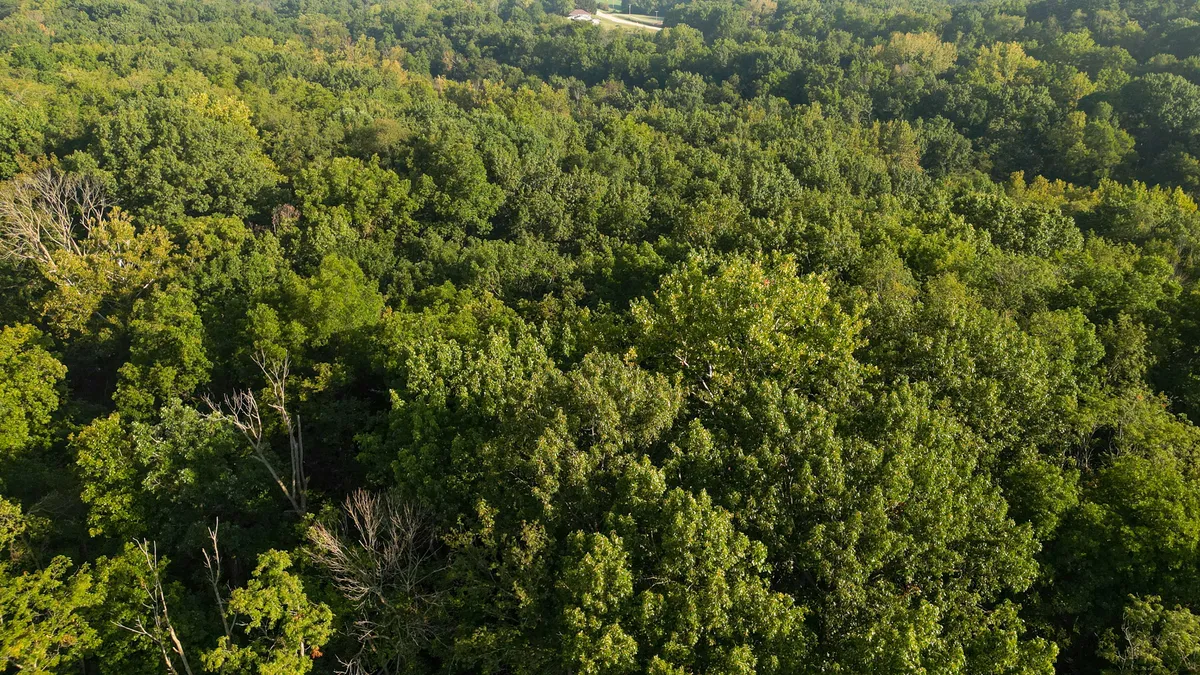
The most significant driver of hunting property value in west-central Illinois is not acreage or even county — it is terrain configuration. A 60-acre property with a timbered ridge dropping into a creek draw, with a pinch point where deer naturally funnel between bedding and feeding, is a more valuable hunting property than a 120-acre property of flat, uniform timber with no topography and no natural travel structure. Deer use terrain, and properties that match how deer move — not how they look from a drone at 400 feet — produce consistent hunting results year after year.
Mature timber with white oak coverage is worth more than young timber or monoculture stands because white oak mast is the single most reliable natural food source for deer in the October and November hunting window. A property with multiple mature white oak flats — areas where mast concentrates deer in predictable locations during peak season — is priced differently than a property with equivalent acreage of young mixed timber that has no reliable mast production. This distinction is hard to see in a listing description and very easy to see walking the property in late August or September when acorn drop begins.
Access, Road Frontage, and Neighbors
A property with a locked gate on a county road, a farm track to an interior parking area, and clear separation from neighboring hunting pressure is a different asset than a property where the entry road is a shared easement with two neighbors who also hunt it in November. Access quality — private, all-weather, and positioned to allow hunters to enter and exit without crossing through the deer's primary bedding or travel corridor — is one of the most undervalued variables in hunting property evaluation.
Neighbors matter in a way that does not show up in a listing. A 100-acre property with a hunting-managed neighbor to the north who keeps the pressure off his ground all summer is positioned very differently than the same property with a neighbor who shoots anything legal from a truck. You cannot learn this from the listing. You can learn it from a conversation with the selling agent and, if possible, a direct conversation with the adjacent landowners.
Whether It Has Been Managed — and for How Long
A property that has been intentionally managed for deer — limited hunting pressure, established food plots, documented sanctuary zones, trail cameras run consistently since 2020 — is worth more than a property with no management history, even if the underlying terrain and timber quality are comparable. Management history is a proxy for what the property is capable of producing, not just what it has been used for. The trail camera database from a managed property tells a buyer something about the age structure of the resident deer population, the frequency of mature buck presence, and how the property responds to controlled pressure. An unmanaged property offers only the terrain speculation — what it might produce under a management program, not what it has been producing.
Ask any seller or listing agent for trail camera history before you make a showing appointment. A well-managed property with a seller who is confident in the hunting quality will have camera data available. A property where the seller cannot produce recent trail camera history either has not been managed or the data tells a story they would rather not share before you are emotionally invested in the ground.
The CREP and Flood-Plain Discount — Why Cheap Acres Are Sometimes Worth Nothing
Some of the lowest per-acre listings in Cass, Morgan, and Fulton County are priced the way they are because they are enrolled in CREP — the Conservation Reserve Enhancement Program — or because they sit in a flood plain with a contract attached. CREP ground pays annual rental payments from USDA but restricts agricultural use and, in some versions of the contract, may restrict hunting access or certain habitat improvements. A buyer who does not read the CREP contract before purchase is buying obligations alongside acreage.
Flood-plain bottom ground that shows up at $1,200 to $1,800 per acre may produce excellent waterfowl hunting in wet years and produce nothing in dry years or years when flood events damage the property. It is not comparable to timber and upland hunting ground at $4,500 per acre. Averaging those two price points to establish a "county average" is how aggregator data misleads buyers into undervaluing the best properties and overvaluing the cheapest ones.
The questions to ask before driving out: What is the tillable percentage and soil PI? Is any of it in CREP? What is the terrain — flat timber or topographic interest? What is the access situation? Are there neighboring landowners who hunt the property borders? Is there trail camera history from the last two seasons? Any property where the seller or agent cannot answer those questions is a property you should walk carefully before you fall in love with it at the showing.
Jared Williams is the Managing Broker and owner of Archer Realty & Auction LLC. He spent 13 years as a producer for the Outdoor Channel before returning to Illinois to build a land brokerage rooted in operator-level expertise in recreational real estate across central and western Illinois. Start the conversation at archerrealty.net.