Leasing Hunting Land in Illinois: What a Fair Rate Looks Like and What the Lease Should Say
What the Lease Market Looks Like Right Now
Hunting lease inquiries in Brown, Schuyler, and Cass counties are running at the highest volume of the year in late October and early November. Hunters who did not find a property to buy this fall, who lost a lease they held last year, or who are searching for additional ground before the November 20 firearm opener are calling landowners directly and through word of mouth at a rate that does not happen at any other point in the calendar.
For a landowner who has not decided whether to lease, or who has never leased their property before, October is the moment to make that decision — not because any deadline requires it, but because the pool of hunters actively searching peaks right now. A landowner who decides to lease in February will find fewer hunters searching and will frequently end up with a tenant who is settling rather than choosing. The hunter who calls in October and offers to pay a full season rate upfront for good-quality timber in Brown or Schuyler County is often a more serious tenant than one who is still looking in December.
Per-Acre Rates in Brown, Schuyler, and Cass Counties
Hunting lease rates in western Illinois for quality deer ground — mature timber with bedding cover, food source adjacency, and reasonable access — currently run in the $15 to $30 per acre per season range. The variation within that range is driven by a combination of deer density, habitat management history, size of the parcel, exclusivity of the lease, and whether the landowner provides any improvements such as food plots, clover strips, or stand locations.
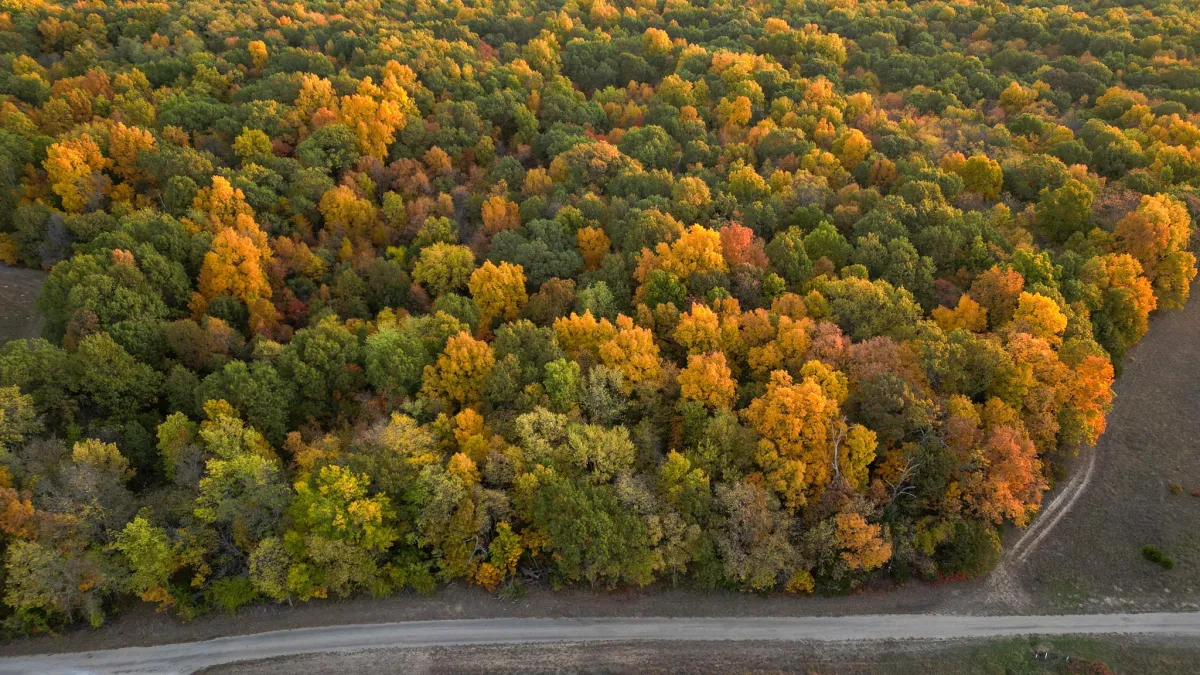
A 100-acre tract in Brown County with solid bluff timber, a creek drainage, and documented history of mature deer activity will command $25 to $30 per acre from the right hunter. That same 100 acres of open ground with limited timber and no bedding cover will be $10 to $15 per acre if it leases at all. Schuyler County ground with similar character runs comparably. Cass County ground along the Illinois River corridor with waterfowl potential as well as deer and turkey hunting can command a premium over upland-only ground if the lessee values the multi-species opportunity.
A rate that is competitive within the county and honest about what the property offers will attract a tenant who understands the value and will respect the ground accordingly. A rate that is priced at the top of the range based on optimistic habitat descriptions will attract hunters who are disappointed when they arrive, and disappointment in a tenant who has paid for access is a worse outcome than starting slightly lower with someone who was accurately informed.
The Landowner's View on Lease Terms
From the landowner's side, the three things a written hunting lease must address beyond the rate and the parcel are: permitted species and methods, number of hunters and guest policy, and liability coverage. A lease that allows deer, turkey, and squirrel hunting with any legal method is a different agreement than one that permits archery only, or one that explicitly excludes hog or predator hunting that might affect the deer population or create access patterns the landowner does not want.
The number of hunters and guest policy is where informal agreements most often create conflict. A hunter who brings two friends on every outing when the lease specifies one primary lessee is not necessarily acting in bad faith — if the lease does not address guests, both parties fill in the blank with their own assumption. Write it down: the number of hunters permitted on the property at any one time, whether guests are allowed and under what conditions, and whether the lessee is required to notify the landowner before bringing someone new onto the property.
Liability is the landowner's primary financial concern and the one most often handled poorly by verbal agreements. Require the lessee to carry personal liability insurance — a minimum of $1 million per occurrence is typical — and to provide proof of coverage before the season begins. A hunting liability policy from a national sportsmen's organization or a specialty insurer costs the hunter relatively little and transfers meaningful risk away from the landowner. A landowner who is receiving compensation for hunting access is in a different legal position than one who grants access without charge, and the insurance requirement reflects that difference.
The Hunter's View on What a Fair Lease Provides
From the hunter's perspective, a fair lease specifies what they are paying for with enough clarity that there is no ambiguity when a situation comes up. Access: where can they park, which gates they can enter, what roads or paths they can use, and whether ATVs or UTVs are permitted and on which trails. Stand rights: how many stands they can install, whether they must be portable, and who is responsible for their removal. Food plots: whether they can plant them, where, what species, and what happens to the investment at the end of the lease if they do not renew.
Crop damage is a term that landowners sometimes overlook. A hunter who operates on ground that has tillable acres adjacent to the timber has a potential obligation under Illinois law related to damage caused by deer they attract or manage. The lease should address how crop damage claims are handled — whether the lessee has any responsibility, how damage is documented, and what process is used if a dispute arises.
Call Archer Realty if you are a landowner in Brown, Schuyler, Cass, or a neighboring county who is fielding hunting lease inquiries this fall.
Jared Williams is the Managing Broker and owner of Archer Realty & Auction LLC, working with landowners and hunters on recreational land leasing, buying, and selling across western and central Illinois. Start the conversation at archerrealty.net.