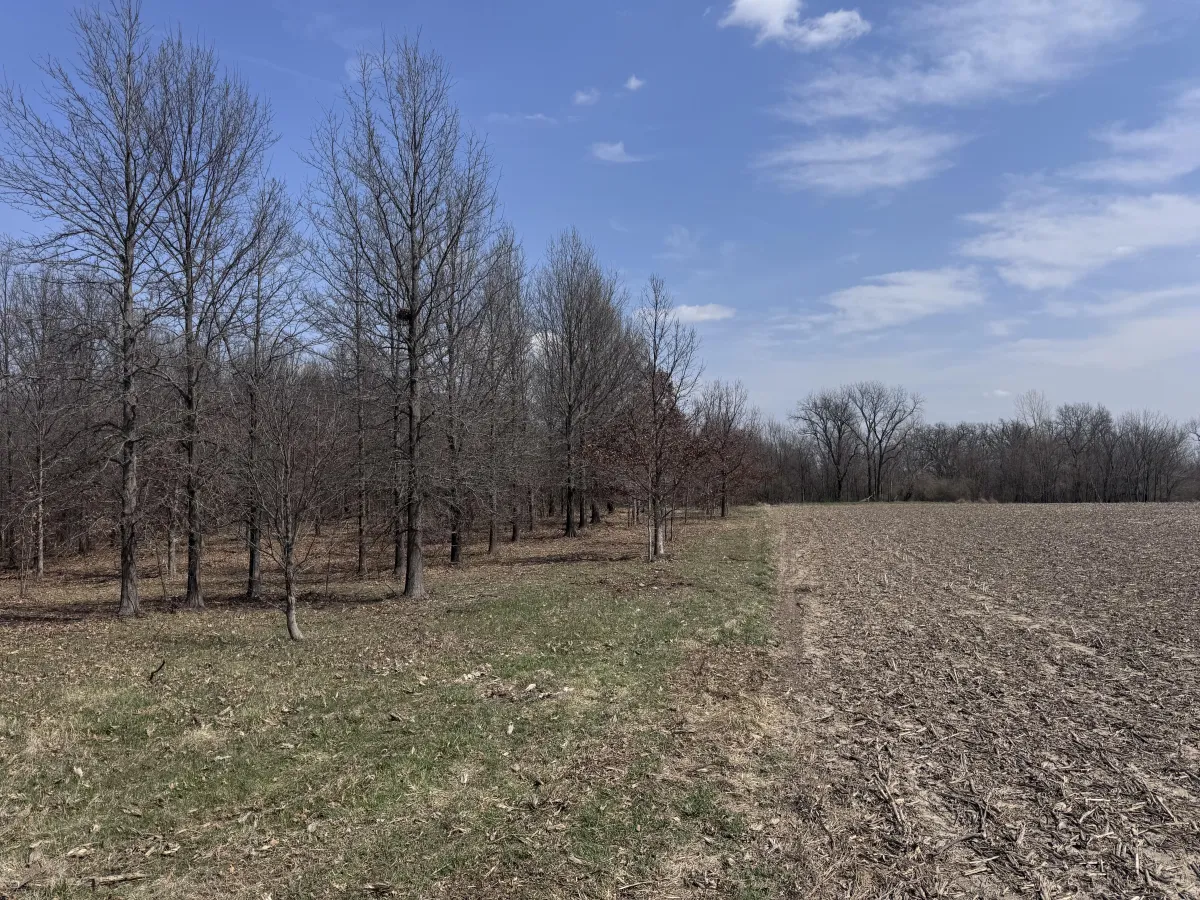
Habitat Management on 40 Acres or Less — What Actually Works on Small Illinois Tracts
Why Small Tracts Require a Different Strategy Than Textbook Habitat Management
Most habitat management content is written for operations with 200 acres or more — room to dedicate 30 acres to native grass sanctuary, run a 5-acre food plot operation, install water impoundments, and still have enough property to absorb hunting pressure without burning the deer off the ground. The 40-acre landowner in central or western Illinois is working with different constraints. Everything is closer together. The neighbors are closer. The margin for error is smaller. A single poor decision — wrong stand location, wrong entry route on the wrong wind — can push the mature deer off a small property for a week or a month.
The principles of habitat management on small tracts are the same as on large ones. The execution is different, and the tolerance for mistakes is lower. Here is what actually works on 40 acres or less in Illinois, based on what produces results rather than what looks good on a habitat management diagram.
Define the Sanctuary First and Commit to It
On a 40-acre property, 10 to 15 acres of absolute no-entry sanctuary is the foundation of a functional small-tract deer program. The sanctuary is where the deer bed. If the deer do not feel safe bedding on your property, they will bed somewhere else and visit yours — briefly, at the edges, unpredictably. That is not a huntable deer population. That is pass-through traffic.
The sanctuary should be the densest, least-accessible portion of the property — a brushy draw, a thicket, a timber stand with native understory. If it does not exist naturally, it can be created over two to three seasons by cutting selected timber to encourage regrowth, allowing native vegetation to establish in bedding areas, and adding brush piles. The objective is thermal and visual cover that mature deer choose as a bedding location when they have options.
The no-entry commitment has to be real. No walking the sanctuary to check camera cards. No slip-ins to look for sheds. No driving through in summer for any reason that is not genuinely necessary. Every intrusion resets the deer's comfort level in that area. On a small property, repeated intrusions into the bedding area are the single most common reason that mature deer disappear from the camera inventory by October.
Food Plot Placement — Position for the Wind, Not for the View
Food plots on small tracts are often placed for the landowner's convenience — close to a lane, near the road, where the tractor can easily get in and out. That placement priority produces food plots that the landowner can see from the road and that mature deer use only at night. The correct priority for food plot placement on a small property is wind direction relative to the bedding area and the hunting position.
On a 40-acre property in central Illinois, the prevailing winds in October and November run primarily from the north and west, with south wind periods during weather changes. A food plot positioned at the downwind edge of the bedding area — so that deer moving from bed to feed walk into the prevailing wind rather than across it — gives mature deer the confidence to enter the plot in daylight. The same plot positioned upwind of bedding will be worked almost exclusively after dark, because every deer approaching from the sanctuary crosses the hunter's scent first.
Small plots — one quarter acre to one acre — in multiple locations perform better on small properties than a single large plot. A scattered plot system creates multiple approach routes, multiple stand options, and reduces the pressure impact of hunting any single location. Illinois fall food options — standing soybeans where accessible, brassicas, clover, winter rye — each have their productive windows. Variety in the plot system extends the functional hunting season within those 40 acres.
Entry and Exit Routes — the Invisible Piece That Determines Everything
A 40-acre property can have excellent bedding, excellent food, and good stand locations — and a hunter can educate every mature deer on it within two weeks by using the wrong entry and exit routes. On small properties, the human entry and exit is the most controllable variable, and it is the one that small-tract hunters most often manage poorly.
Map every stand location and every approach route before the season. For each stand, identify the wind directions that allow a scent-clean approach from the parking area to the stand. Hunt each stand only on its productive wind, regardless of what the calendar says about the rut or what your schedule says about when you can be there. Exit routes deserve the same discipline as entry routes. A hunter who enters perfectly but walks back to the truck through the food plot or past the bedding area has told every deer on the property exactly where the threat comes from.
Managing Hunting Pressure on 40 Acres
The single most reliable predictor of whether a 40-acre property holds mature deer through October and November is hunting pressure — specifically, how often and how carelessly the property is entered. A small property hunted three or four times per week burns quickly. A small property entered carefully, on the right wind, and exited with equal discipline can hold mature deer throughout the archery season.
Two to three sits per stand location per season is a rough guideline that many experienced small-tract hunters use. More than that on a given stand, and the deer pattern around the intrusion. Less than that, and you are leaving opportunity on the table. The specific number depends on how well you manage entry, exit, and scent on each visit — a perfect sit on a dead-calm morning with a consistent north wind does less damage than an impatient sit on a variable wind with a sloppy exit.
The deer on your 40 acres are not stupid. They are measuring the risk-reward ratio of using your property against the adjacent ground they have access to. When the risk is low and the food and cover are good, they stay. When the risk rises, they shift. On a small property, you are managing that calculation every time you enter the ground. The 40-acre hunter who masters pressure management will consistently out-produce the neighbor with 200 acres who enters the property whenever he feels like it.
Jared Williams is the Managing Broker and owner of Archer Realty & Auction LLC. He spent 13 years as a producer for the Outdoor Channel before returning to Illinois to build a land brokerage rooted in operator-level expertise in recreational real estate across central and western Illinois. Start the conversation at archerrealty.net.