You Never See It Happening Until It's Already There — What Field Edge Encroachment Is Really Costing Illinois Landowners
What Field Edge Encroachment Is Really Costing Illinois Landowners
There's a particular quality to the way nature reclaims ground.
It doesn't announce itself. It doesn't arrive dramatically or all at once. It moves the way time moves — steadily, quietly, in increments so small that no single day feels significant.
And then one season you look at a field edge that used to be clean and open and you realize it hasn't been that way for years. The timberline has moved. The brush is thick and established. The productive ground you thought you owned is somewhere inside that encroachment now, waiting to be reclaimed.
That's the moment most landowners finally see it. Not when it was happening. After.
What's Actually Happening Along Your Field Edges
Field edge encroachment is one of the most consistent and overlooked losses on agricultural and rural properties across central Illinois.
It happens through two forces working in combination. Invasive species — honeysuckle, autumn olive, multiflora rose — establish quickly in edge environments where soil has been disturbed and light is available. They grow faster than native vegetation and create dense cover that shades out everything beneath them. Once established they don't stay where they are. They expand.
Behind the invasive species timber follows. Trees that couldn't establish in the open field find purchase in the cover the invasives create. Roots extend. Canopy fills in. What started as a few feet of brush becomes a legitimate timberline that has moved 15, 20, sometimes 30 feet into what used to be productive ground.
The process takes years. But it compounds. And by the time it's visible enough to feel urgent the encroachment has already been happening for a long time.
The View From Inside the Cab
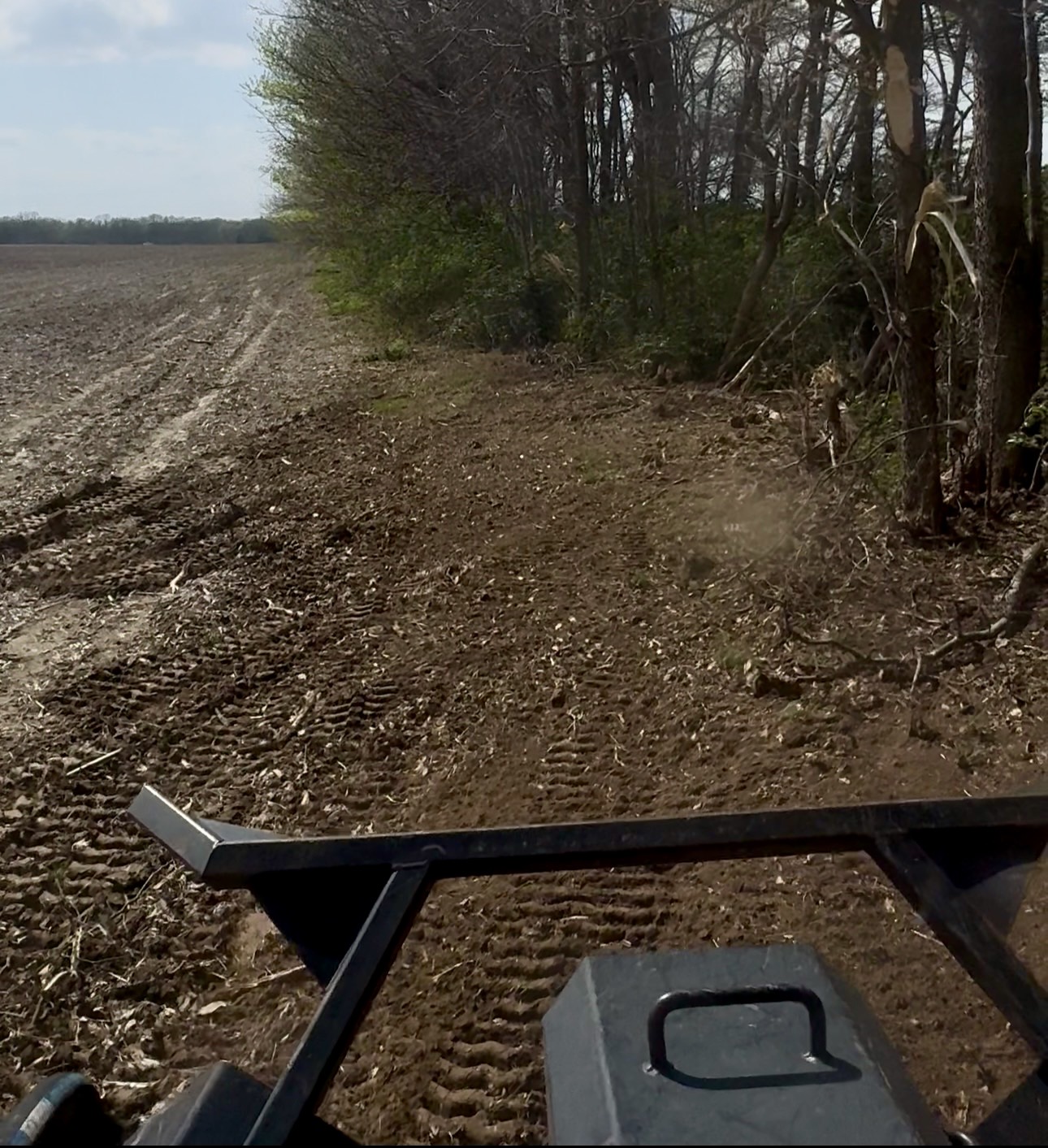
Part 2 of the field edge management series was filmed from inside the skid steer — POV from the cab as the forestry mulcher works through timberline encroachment on a central Illinois property.
There's something about that perspective that makes the scale of the work real in a way that standing outside the machine doesn't. You're moving through 20 feet of established timberline — brush and invasive species and small timber that has been advancing on this field edge for years — and watching it come down pass by pass.
From inside the cab you can see the before and after simultaneously. The thick established encroachment still standing ahead. The open cleared ground behind. The difference is immediate and dramatic.
And then a turkey walks through.
Mid-work, mid-thought, a turkey appears in the timber just off the field edge. It stops everything for a second — not the machine, but the mental framing of what the work is actually for.
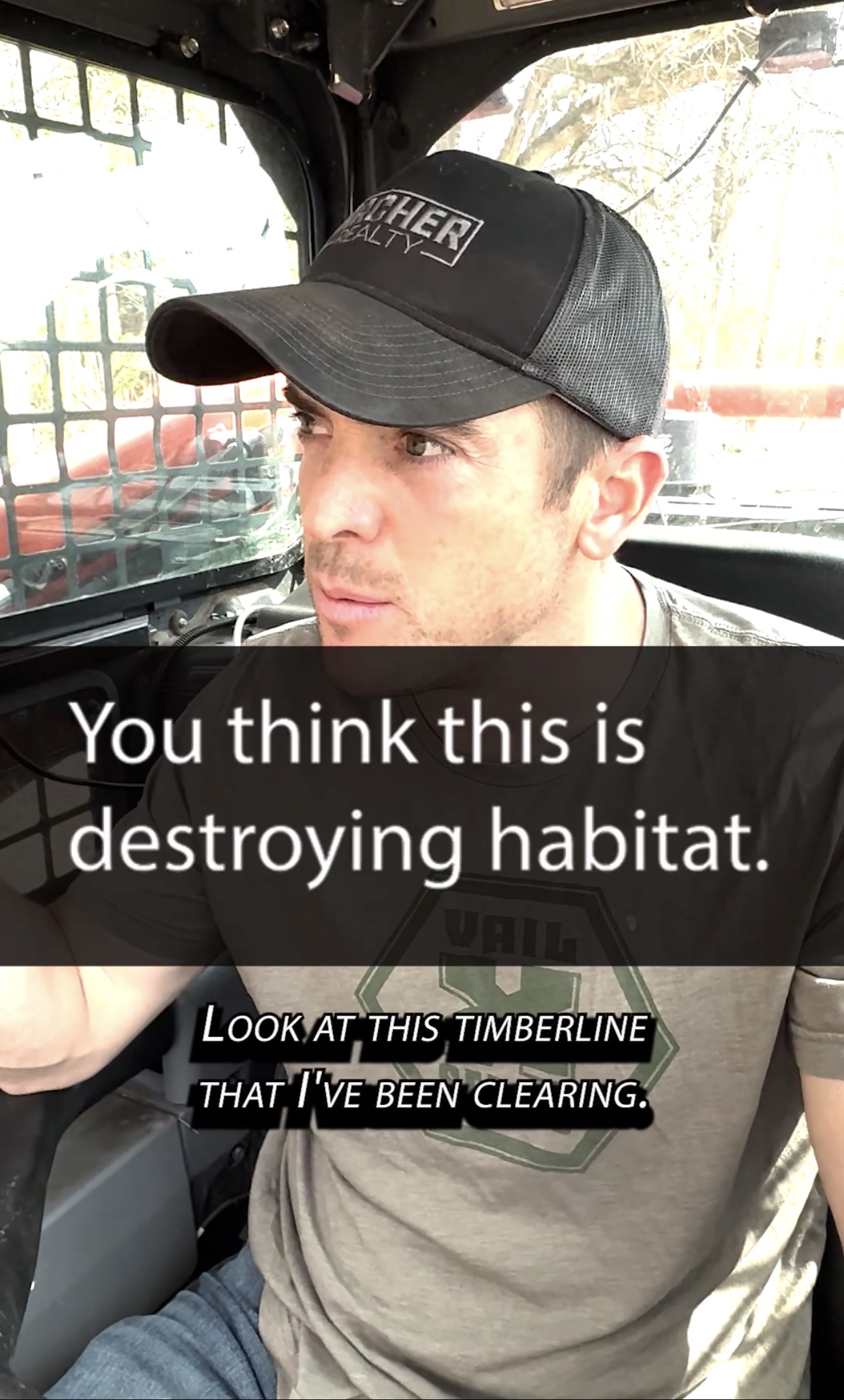
We're not out here clearing for the sake of clearing. We're not destroying habitat. We're trying to make it better.
Better for the wildlife that uses this ground. Better for the production that comes off it. Better for the long term value of what this property is and what it can become.
That turkey walking through the cleared edge wasn't planned. But it was the clearest possible reminder of why this work matters beyond the math.
Better for Wildlife. Better for Production. Better for the Long Term.
This is the piece that gets misunderstood most often about land management work.
A forestry mulcher clearing a timberline looks destructive from the outside. Trees coming down. Brush being ground up. An edge that was thick and established being opened up in a single pass.
What it actually creates is different from what it looks like in the moment.
Cleared field edges open sunlight to ground that has been shaded for years. Native grasses and forbs establish in the cleared areas — food sources for wildlife that the invasive cover was suppressing. The edge between open field and managed timber becomes a functional habitat transition rather than a wall of invasive brush that nothing productive uses.
For wildlife — deer, turkey, pheasant, songbirds — a well-managed field edge is significantly more valuable than an overgrown one. The bedding, feeding, and travel patterns that hunters and wildlife managers care about are driven by edge quality. A clean productive edge creates the transition zones where animals live and move. An overgrown invasive edge creates a barrier they move around rather than through.
For production the benefit is straightforward. Reclaimed ground gets planted. It produces. Every acre that comes back into production is an acre that was previously generating nothing while the encroachment advanced.
For long term property value the math is in the first article of this series. 25 feet of encroachment over a mile of field edge is over three acres of productive ground. At current Illinois farmland values that number is not abstract. Reclaim it and it's worth something. Leave it and it keeps costing you.
The Incremental Nature of Good Land Management
The turkey moment in the cab video pointed to something worth saying directly.
Good land management doesn't look dramatic most of the time. It looks like showing up on a property when the timing is right, running a machine through encroachment that has been building for years, and making a series of small deliberate decisions that move the property in a better direction.
Nobody sees it happening in real time. The results show up months and seasons later — in the wildlife patterns, in the field productivity, in the way the ground looks and feels and functions compared to what it was before.
That's the same way the encroachment happened. Incrementally. Quietly. Over time.
The difference is intentionality. The encroachment happened by default. The reclamation happens by decision.
That distinction is what separates a property that improves over time from one that slowly gives ground back to nature without anyone noticing until it's too late.
This Is Part of a Longer Series
The field edge management series is documenting real work on working properties across central Illinois — the math behind what encroachment costs, what the work looks like from inside the cab, and what the property becomes when the work is done consistently over time.
It connects directly to the invasive species series from earlier this year. Honeysuckle and autumn olive aren't just a timber problem. They're a productive ground problem. They're a wildlife habitat problem. They're a property value problem. And they're connected — the same species clearing from the timber is the same species advancing on the field edges.
The work is ongoing. The principle is consistent.
Leave it better than you found it.
Jared Williams is the Managing Broker of Archer Realty, a land and rural property brokerage serving central and greater Illinois. He is a landowner, farmer, licensed auctioneer, and land manager who farms his own ground and manages properties across Cass, Menard, Sangamon, Macoupin, Greene, Morgan, Fulton, and surrounding counties.
View current land listings or request a property evaluation at archerrealty.net.


