Farm Drainage Tile Repair Costs and Land Value in Illinois
Why Harvest Is When Tile Problems Appear
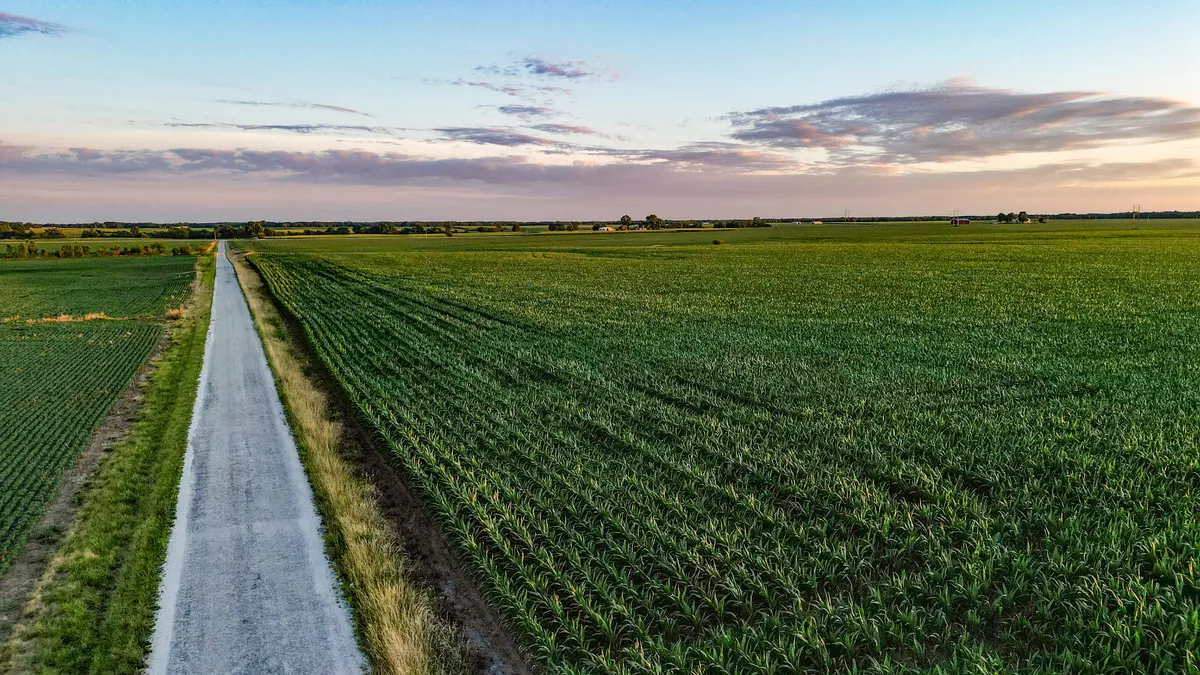
Drainage tile failure in central Illinois farmland is most visible during and immediately after harvest for a simple reason: the weight and traffic of combines and grain carts crossing repeatedly over a failing tile run compresses the soil over the tile and produces the surface signs — soft spots, standing water after a rain, rutting in the field — that are invisible when the ground is dry and untraveled. A field that looks fine in August reveals its drainage problems in October when 75,000 pounds of equipment is moving across it in wet conditions.
For a buyer doing pre-purchase due diligence on central Illinois farmland in Sangamon, Menard, or Mason County, harvest timing is the single best opportunity to see a field's drainage character before closing. A seller who will not allow a potential buyer to visit the property during harvest, or who cannot explain the drainage history of the field, is declining to show you information that exists. That reluctance is a data point worth noting.
For a seller preparing a property for sale this fall, identifying tile problems before listing and addressing them — or pricing accordingly — is better than having a buyer discover them after the earnest money has been paid. A buyer who finds a failing tile system during due diligence has negotiating leverage. A seller who discloses the condition and prices for it controls the conversation instead.
What Post-Harvest Tile Repair Costs in Sangamon, Menard, and Mason Counties
Tile repair and new tile installation pricing in central Illinois has increased over the last several years with materials and labor costs, and the estimates below reflect 2026 season pricing. Spot repairs — replacing a short section of failed tile, cleaning out a plugged outlet, or repairing a collapsed junction — run $500 to $2,500 per repair depending on depth, access, and whether the failed section requires excavation through a field tile network or can be accessed from a surface outlet. Spot repairs are appropriate when the system is otherwise functional and the failure is isolated.
New tile installation — running a new main line, adding laterals to improve drainage in a persistently wet area, or installing a blind inlet system — runs $1,500 to $3,000 per acre in central Illinois depending on tile spacing, depth, outlet conditions, and whether the work requires crossing an existing road or drainage structure. A 40-acre field that needs comprehensive tile installation is a $60,000 to $120,000 project. That cost, amortized over the economic life of the tile system — typically 40 to 60 years for modern plastic tile with a clean outlet — is a carrying cost that a well-tiled field should produce in improved yields and reduced management cost over time.
Drainage district connection fees and outlet permits add cost in areas where new tile must connect to a district main or cross a district right-of-way. Confirm with the applicable drainage district whether a new installation or connection requires a permit and what the associated fees are before budgeting a tile project.
How Tile Condition Affects Land Value
The difference in per-acre value between a well-tiled, fully drained central Illinois tract and a comparable tract with inadequate or failing drainage is real and meaningful in the current market. A Sangamon County tillable acre with a PI of 130 and full tile drainage sells for a materially higher price per acre than a comparable-PI acre with documented wet problem areas or no tile at all. Buyers who intend to farm the ground understand that yield drag from wet spots and restricted planting windows is a multi-year cost, and they price it in.
At current farmland prices in Sangamon and Menard County — $12,000 to $16,000 per acre for highly productive ground — a per-acre tile deficiency discount of $500 to $1,500 translates to a meaningful total price difference on even a modest parcel. A 160-acre tract with a $1,000 per acre tile discount against otherwise comparable ground is $160,000 below the well-tiled comparable. That gap is real, and it exceeds the cost of the tile repair in many cases, which is why sellers of ground with known tile issues benefit from addressing them before listing rather than absorbing the full discount at sale.
Tile Maps and What to Ask Before You Offer
A tile map is the as-built record of the tile system — where the mains run, where the laterals are, where the outlets discharge, and what size and material the tile is. For older tile systems installed before modern GPS, tile maps are sometimes paper drawings held by the original drainage contractor, maintained by the drainage district, or simply not available because no record was kept. For newer systems installed in the last 20 to 30 years, GPS-accurate maps are typically available from the contractor and should be in the property file.
Ask the listing broker or seller for any tile maps or drainage records available for the property. A seller who responds with a blank tile map or no documentation for a 200-acre central Illinois tract should be a prompt to order a tile camera inspection or a probe survey as part of due diligence. A tile camera run through the main outlets will confirm whether the system is intact, whether outlets are clear, and where failures or root intrusion exist. The cost of that inspection — $500 to $1,500 for a typical tract — is minimal compared to the cost of discovering a failing system after closing.
Call Archer Realty if you are buying or selling farmland in Sangamon, Menard, Mason, or a neighboring county and want to understand how tile condition affects value in the current market.
Jared Williams is the Managing Broker and owner of Archer Realty & Auction LLC, a licensed auctioneer serving agricultural land buyers and sellers in Sangamon, Menard, Mason, and neighboring central Illinois counties. Start the conversation at archerrealty.net.