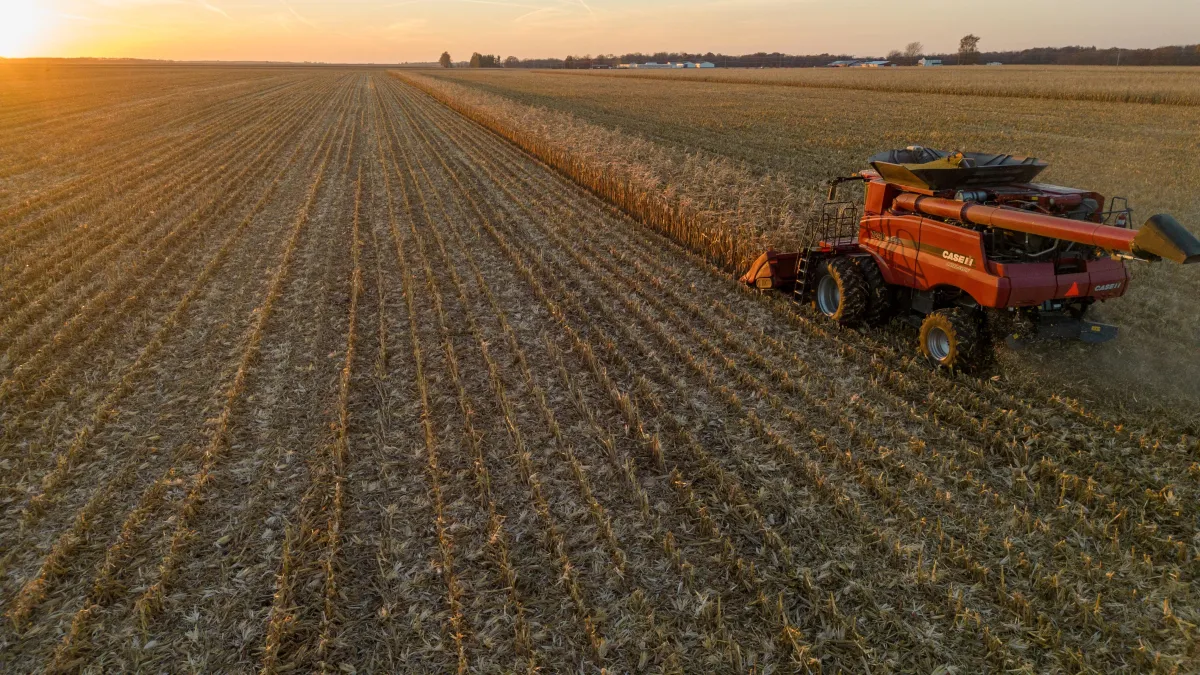
Fall Farmland Auction Season in Illinois — What to Expect and How to Compete
Why Fall Is When Illinois Farmland Moves
The Illinois farmland auction calendar concentrates in the fall for the same reason that crop ground gets sold after harvest: the income from the current crop year has been received or is being received, the tenant knows whether renewal conversations are going well or not, and families who have been thinking about estate transitions through the summer have made their decision. September through December is when the majority of central Illinois farmland auction volume happens, and 2026 is following that pattern.
For a buyer who has been watching the market and waiting for the right parcel to appear, fall auction season is not the time to be still deciding whether to compete. It is the time to have already done the homework — soil surveys pulled, FSA records reviewed, financing in place — so that when the parcel you want comes to auction, you are positioned to bid with clarity rather than scrambling with uncertainty.
How an Illinois Farmland Auction Actually Works
Most central Illinois farmland auctions run one of two formats: live auction with absentee and phone bidding options, or sealed-bid auction with a single submission deadline. Live auctions are the dominant format for competitive ground because the open bidding environment creates price discovery — competing bidders can see the level of interest in real time and adjust their participation accordingly. Sealed-bid auctions are more common for estates where the family wants a controlled, low-drama process, or for properties where the seller wants to limit the public nature of the transaction.
In a live auction, the bidding starts at the auctioneer's opening call — often 10 to 20 percent below the seller's reserve or the broker's estimated value — and advances in increments until only one bidder remains. For competitive central Illinois ground, the bidding often advances quickly through the opening range before slowing as bidders approach the upper limits of their underwriting. The final 10 percent of the price is frequently where a live auction separates from a private treaty negotiation — competitive pressure in the room, on the phone, and online generates results that a private negotiation does not consistently replicate.
Most Illinois farmland auctions run with a seller reserve — a minimum price below which the property will not sell regardless of bidding activity. The reserve is typically confidential, and the auctioneer will indicate when bidding has reached the reserve and the property is "selling." If bidding does not reach the reserve, the auctioneer typically opens post-auction negotiation between the high bidder and the seller.
What Drives Final Prices Above the Pre-Auction Estimate
Pre-auction estimates — the range a broker or auctioneer publishes before the event — are based on comparable sales and market data. Final auction prices exceed those estimates when two or more qualified bidders both want the same ground enough to push past the point where the numbers strictly justify the bid. That dynamic happens regularly on top-tier central Illinois ground, and it is the primary reason sellers choose auction over private treaty for their best parcels.
The variables that generate above-estimate outcomes at Illinois farmland auctions are consistent: high PI ground in a county where institutional buyers are actively deploying capital, a clean tenant situation with a long track record, a well-tiled field with documented yield history, and strong turnout on auction day — which is partly a function of how well the auction was marketed. A farmland auction that draws 40 registered bidders produces different price outcomes than the same auction with 12 registered bidders, even if the parcel is identical. Marketing reach and bidder pool depth matter.
How Sellers Should Position for Fall Auction Season
A seller who wants to capture peak fall auction season pricing should have their property listed and marketed by early September at the latest, with an auction date in October or early November. The window between listing and auction — typically four to six weeks — is when the marketing creates bidder awareness, due diligence happens, and financing gets arranged. A property listed in late October with a November auction date is working against compressed timelines that reduce bidder participation.
The documentation that drives buyer confidence — and buyer confidence drives bidder participation — includes a current soil survey or PI verification, FSA farm records showing yield history, the current lease and tenant history, any tile maps available, and a clear title commitment. Sellers who have this package assembled before the listing goes public reduce the friction that causes otherwise interested buyers to skip an auction rather than showing up unprepared.
Condition of any improvements — grain bins, drainage outlets, field access roads — should be addressed before auction where economically justified. Buyers at auction are underwriting condition as part of their bid. Deferred maintenance that a buyer can see generates discounts that a seller pays for in the final price.
How Buyers Should Position to Compete
The buyers who consistently win at Illinois farmland auctions have one thing in common that matters more than any other: they know exactly what they are willing to pay before they walk in the room, and they do not let the competitive environment push them past that number. That ceiling is established by the due diligence — the soil work, the yield history review, the current comparable sales — not by what the other bidders are doing. A buyer who has a clear, informed ceiling can bid confidently through the competitive middle range without getting swept into a price that does not make economic sense for their situation.
Financing pre-approval is not optional for serious bidders at competitive Illinois farmland auctions. Many auctions require a 10 percent earnest money deposit on auction day, and the closing timeline is typically 30 to 45 days. A buyer who has not arranged financing before the auction cannot move at the required pace when they win.
Register early, attend the property showing if one is offered, ask questions of the listing broker before auction day rather than on it, and make your due diligence decisions before you sit down in the auction room. The time to decide whether you want the property is not when the auctioneer opens the bidding.
Jared Williams is the Managing Broker and owner of Archer Realty & Auction LLC. He is a licensed Illinois auctioneer specializing in farmland auction and land sales across central and western Illinois. Start the conversation at archerrealty.net.